






























The British Virgin Islands (BVI) progresses to be among the globe’s most alluring regions for transnational firm formation. With its trade-friendly climate, minimal taxation, and confidentiality, the region draws traders and financiers from around the globe. Also, even in this favourable environment, firms can lose their licit status if they fail to meet their statutory onuses. When this happens, the firm is erased off the directory and ceases to exist as a licit firm. Restoring a BVI company supplies a formal sequence to bring it back into licit existence, allowing its proprietors to recover oversight, safeguard holdings, and handle contractual relationships.
This reinstatement sequence is governed by the polity's legislation and varies contingent on the reason the firm was erased off and the length of time it has stayed inactive. Reinstatement may be pursued either via an oversight route or via the courts. Knowing which pathway applies to a given situation is prime. In my professional experience, I frequently assist clients in restoring firms that have been erased off, primely when there are unresolved onuses, ongoing undertakings, or valuable holdings involved. A timely and strategic approach to reinstatement can minimise licit exposure and help handle the integrity of the trade setup.
Reinstatement primely treats the firm as though it was never erased off. All its prerogatives, holdings, and onuses are reinstated, and it is once again known as an active licit firm. Firms are commonly erased for reasons namely non-remittance of annual bills, failure to file statutory indentures, or breaches of regional directives. In many cases, administrative oversight or a change in trade tactic can lead to a lapse in abidance, eventually concluding in eviction from the directory.
There are two ways to reinstate a firm. Administrative reinstatement is simpler when the firm was erased voluntarily or for failing to meet basic needs. Also, it must be applied for within a particular time frame, usually seven years from the date of eviction. Reinstatement by court order becomes mandatory when the administrative window has been sealed or if the firm’s situation comprises more intricate licit issues.
Reinstatement becomes urgent when a firm holds holdings, is party to existing undertakings, or has outstanding dues. Warranting the firm to stay inactive for too long may result in the loss of property or licit standing. The reinstatement sequence comprises gathering company indentures, working with an endorsed broker, arranging the mandatory enrollments, remitting any outstanding bills, and asserting the firm is compliant with the current licit setup comprising pecuniary substance needs where applicable.
Engagement with either the region’s FSC or the court must be managed with care. Each power has its own procedural expectations and indentures needs. Mistakes or incomplete filings can delay the reinstatement or even conclude in a refusal. The licit outcomes of being erased should not be underestimated. During the term of inaction, the firm cannot perform, commence or defend licit sequences, or act in its own name. Bank accounts may be frozen, and the firm is no longer recognised as having licit standing. Reinstatement reverses this status, but only from the point of reinstatement, which is why performing quickly is vital.
Restoring a BVI company is more than a procedural formality. It is a needed and often urgent to preserve the function of an offshore firm. Whether the firm was erased off due to inadvertent non-abidance or a lapse in oversight, the capacity to bring it back into good standing supplies a vital tool for holding protection and trade continuity. Professional assistance and a clear knowledge of the prime licit sequences are prime to assert a smooth and effective reinstatement. Those seeking to revive a BVI firm should act promptly and be prepared with a well-structured plan to regain oversight and safeguard their interests.
Why do firms enroll in the polity?
The polity, nestled in the Caribbean Sea, has long been regarded as among the globe’s most trusted hubs for transnational trade. With its strong political stability, modern licit setup and favourable excise regime, the BVI progresses to attract financiers from around the globe seeking to enroll and, where mandatory, reinstate corporate firms.
An added appeal lies in the high level of confidentiality the BVI offers. Files about financiers are not made publicly accessible, enabling proprietors to handle their privacy. This feature has reinforced the polity’s status as among the sought-after transnational regions, particularly for traders who prioritise discretion alongside commercial efficiency.
It is a preferred option for enrolling distinct forms of firms, comprising holding structures, trading firms, and speculation vehicles. These firms are often set up to aid global tasks, thanks to the region’s favourable transnational reputation and supervisory flexibility.
Despite the leverages, firms may be erased off the directory if they fail to abide with regional needs. This can occur for reasons namely failure to remit annual bills or neglecting to handle an enrolled broker. Even successful and active trades can find themselves removed if licit onuses are overlooked.
Restoring a company’s status in the BVI is a viable sequence, but it mandates a thorough knowledge of the circumstances surrounding the deregistration. Mercantile proprietors must identify the reason for the firm’s eviction and assert that all mandatory phases are taken to bring it back into good standing.
The reinstatement sequence demands careful attention to detail, comprising abidance with statutory deadlines, settlement of outstanding bills, and filing of mandated indentures. Working with experienced experts familiar with BVI directives is often prime to navigate the sequence smoothly and efficiently.
The BVI stays a premier region for transnational firm registration, offering a favourable blend of licit security, excise neutrality, and operational privacy. For Mercantiles seeking to handle or reinstate their presence in the region, knowing the licit setup and reinstatement sequences is critical to asserting ongoing abidance and success.
Substance needs
In response to evolving global norms against excise evasion, the concept of pecuniary substance has become prime for handling corporate legitimacy in transnational regions. This global shift has significantly impacted the supervisory environment, needing mercantiles to show that they are more than just paper firms.
The alterations stem from the BVI Economic Substance (Companies and Limited Partnerships) Act, 2018, which was initiated to abide with the OECD’s Base Erosion and Profit Shifting (BEPS) project. The statute sets clear expectations: certain firms and partnerships must now show they are genuinely performing mercantile tasks within the polity.
Under the current directives, firms enrolled are obliged to partake in one or more of the prime tasks below:
- Holding business
- Fiscal leasing and lending
- Intellectual property
- Fund management mercantile
- Shipping, port tasks, distribution, insurance, and related aids
For passive holding firms that merely hold stakes and do not partake in commercial tasks, the abidance onuses may be less demanding. Firms that are operational—primely those seeking reinstatement after being erased off the directory—must clearly prove their active mercantile presence in the polity.
- Assert that core decision-making occurs in the polity. This includes holding board meetings on the polity and making strategic approvals regionally, rather than remotely.
- Employ staff appropriate to the mercantile scheme. Firms must have qualified experts on licitly binding employment undertakings.
- Demonstrate regional operational expenditure. This comprises genuine spending on salaries, office rent, utilities, and other operational costs within the BVI.
- Performs from a physical office in the BVI. A mere enrolled broker address is no longer sufficient to meet the pecuniary presence standard.
- Possess technical infrastructure and resources in the BVI. The firm must have the tools and equipment mandatory to undertake its daily tasks from within the region.
Failing to meet these substance needs can lead to serious sanctions. Firms may face fiscal fines, and their details could be reported to the excise overseers in the regions where the ultimate beneficial proprietors reside. In extreme cases, non-compliant firms may be erased off the directory, making reinstatement an intricate sequence. Any attempt to reinstate such firms will mandate not only evidence that past violations have been addressed but also a credible plan showing future abidance with all substance rules.
Abidance with pecuniary substance directives is particularly vital for firms involved in transnational mercantile, those seeking to open bank accounts, or those wishing to retain tax residency status in the BVI. Without clear evidence of a legitimate mercantile presence on the polity, these objectives become practically unattainable.
In this novel supervisory climate, firms must move beyond formal enrollment and show real substance. The BVI now demands a meaningful pecuniary scheme—and failure to adapt may jeopardise a firm's licit and operational standing in among the globe’s most well-known transnational regions.
Legislative directives
Restoring a company that has been struck off the register in the BVI is a systematic and often complicated sequence. It requires a comprehensive understanding of the licit system and the organisations that are a part of it. Oversight is shared by global abidance organisations, the judiciary, and oversight overseers. Here is a whole list of the things that control the restoration of firms in the polity.
Registrar of Corporate Affairs
The primary control for reinstating a firm is the Registrar. It handles the trade directory, oversees the cancelling sequence, and sequences enrollments for re-enrollment. Firms can be reinstated without the mandate to commence court proceedings, supplied they follow the correct oversight procedure. Even this simplified path mandates strict adherence to all procedural rules and submission deadlines. Failure to abide may conclude in delays or outright rejection.
BVI Financial Services Commission (FSC)
The FSC plays a supervisory role in asserting abidance with the polity’s corporate statutes. It regulates firm formation brokers, fiscal service providers, and endorsed trust firms. When evaluating a reinstatement request, the FSC assesses whether the firm meets the region’s norms of visibility, proprietorship disclosure, and supervisory reporting. The Commission also has the power to undertake surveys and to impose restrictions on mercantiles that fail to meet these onuses. Reinstatement is contingent on the enroller showing a clean abidance history or addressing past deficiencies.
Eastern Caribbean Supreme Court – Commercial divisionIn situations where oversight reinstatement is not possible—namely where the Registrar refuses the enrollment, a licit dispute arises, or there are exceptional circumstances—the case must be referred to the Commercial Division of the Eastern Caribbean Supreme Court. The Court is empowered to issue an order restoring the firm to the directory and may impose conditions, comprising payment of outstanding sanctions or submission of fiscal guarantees. This judicial route is typically pursued when the reasons for dissolution extend beyond simple non-remittance or oversight.
Legislative setup
The reinstatement of firms in the polity is primarily governed by the BVI Business Companies Act, 2004. This legislation sets out the grounds for firm removal, the sequence for reinstatement, and the powers of both the Registrar and the Court. When court action is mandatory, the Civil Procedure Rules also apply. Together, these licit instruments form the basis for managing corporate lifecycles, from formation to dissolution and potential reinstatement.
Transnational abidance norms
Why a firm may be excluded from the directory
In the polity, a firm stays licitly recognised only if it abides with particular statutory onuses. Failure to meet these needs may lead to the firm being erased off the directory. When this occurs, the firm loses its good standing and becomes ineligible to perform mercantile or enter into licit deals.
Here are the prevalent reasons a BVI firm may lose its status, along with the mandatory phases for reinstatement:
- Non-remittance of the annual feeEach polity firm must remit a government fee annually via an endorsed enrolled broker. Failure to meet this onus by the due date outcomes in the automatic suspension of the firm’s status. To reinstate its licit standing, the firm must settle the outstanding bills, comprising any sanctions and the official BVI firm reinstatement fee.
- Absence of an enrolled brokerAll firms in the polity are mandated by law to handle an enrolled broker on the polity. If the broker ceases to act and a novel one is not promptly delegated, the firm is deemed inactive. Reinstatement mandates delegating a novel endorsed broker and conveying the mandatory indentures for re-enrollment.
- Expiry of temporary enrollmentSome firms are enrolled for a fixed term. If this timeframe lapses without renewal or extension, the firm is considered erased off. Reinstatement in such cases comprises filing a formal enrollment with the registrar to extend the firm’s existence or commence the recovery sequence.
- Indentures errors or delaysErrors or omissions in mandated files, namely failing to submit a whole reinstatement papers or providing inaccurate files, can lead to the firm's eviction from the directory. In such situations, the registrar may request further details or corrections. Until these are supplied, the firm’s licit status stays suspended.
- Non-abidance with AML/CFT directivesThe polity adheres strictly to AML and CFT norms. Firms that fail to open beneficial proprietorship files or ignore Enhanced Due Diligence sequences may be erased off. Deficiencies in customer due diligence, internal oversights, or peril oversight setups are also grounds for supervisory action.
- Breach of sanctions or supervisory normsEngaging with blacklisted regions or failing to abide with transnational sanctions may conclude in exclusion from the directory. It equally applies to any serious breach discovered during supervisory surveys. Such non-abidance could prompt the overseers to revoke the firm's corporate status.
It is prime to note that being erased off does not mean the firm is permanently sealed. However, it does severely restrict its licit capacity. To minimise mercantile disruption—namely loss of banking facilities or contractual relationships—prompt action should be taken. Beginning the reinstatement sequence as early as possible is prime to reinstate full operational prerogatives and handle commercial credibility in the BVI and beyond.
Enrolled broker: Key figure in re-establishing a company in the BVI
The corporate governance framework in the BVI is underpinned by a fundamental licit requirement: the involvement of an enrolled broker. This is not merely a formality but a core component of the region’s corporate supervisory model. Whether establishing, dissolving, or restoring a firm, such actions can only be conducted via a licensed agent operating within the BVI. The statute is explicit—without an authorised regional broker, no formal corporate scheme can take place, even in cases where a firm has been deleted from the directory.
Under the polity statute, every active firm must handle an updated enrolled broker, duly endorsed within the region. If this link is broken—namely when a broker discontinues support—the firm effectively loses its standing in the licit setup. This means the firm becomes non-functional from a licit perspective, and any attempts at reinstatement are put on hold until a novel broker is duly delegated. This requirement sets the polity apart from many other transnational regions where corporate reactivation might be possible without direct broker involvement.
Role of an enrolled broker
The enrolled broker serves as the company’s primary intermediary in dealings with BVI governmental bodies. Their responsibilities are broad and highly regulated, and include the following:
- Arranging and conveying the enrollment for incorporation or reinstatement, along with all mandated aiding files namely resolutions, declarations, and proof of fee payments.
- Performing as the official liaison with the Registrar, conveying filings on behalf of the firm.
- Verifying the identity and power of individuals performing on the firm’s behalf, when mandatory.
- In some cases, assisting in the collection and submission of KYC data and verifying the source of funds, particularly when remitting fines or settling outstanding supervisory bills.
- Monitoring the firm’s abidance with the polity’s AML and CFT directives, which is primely vital when a firm is being reactivated after eviction due to supervisory non-abidance.
Should the enrolled broker cease to act for the firm, no enrollment for reinstatement can be lodged until a replacement broker is officially delegated. Their role is, therefore, not only supervisory but functionally indispensable throughout a firm’s lifecycle.
Overcoming agent disengagement: Options for firm proprietors
In situations where the former broker refuses to continue managing the firm—often due to reputational concerns, previous breaches, or heightened peril assessments—firm proprietors are not left without options. They may involve a novel licensed enrolled broker to assume oversight. Once this novel broker is in place and the transfer of broker authority is formally fulfilled, an enrollment for reinstatement may be conveyed.
However, this transition is not automatic. The novel broker must fulfil additional procedural onuses. These include verifying the legitimacy of the appointment, confirming the identity of the previous beneficial proprietor, and disclosing comprehensive files about the firm’s historical schemes. Only once these conditions are met can the reinstatement sequence move forward.
The polity’s insistence on the continuous presence of an enrolled broker reflects its commitment to corporate visibility, licit integrity, and supervisory oversight. This model enhances investor confidence while asserting that firms stay compliant and traceable within the region. For mercantile proprietors, knowing the critical role and responsibilities of the enrolled broker is prime—not only for handling good standing but also for navigating reinstatement sequences when a corporate scheme is disrupted.
Contact our specialists
Checking the status of a company in the region
If you need to re-establish a BVI company, the first phase is to make sure that the firm can still be revived. But first, you need to check the status of the BVI company. This record will show whether it is listed as active, suspended, or deleted.
The most reliable way is to contact the official BVI FSC (International Business Companies Registry). This resource supplies files on almost all enrolled firms. You need to enter the firm number or name. If the status is indicated as Dormant or Struck off, this means that the firm has been excluded or temporarily suspended. Therefore, you can begin the reinstatement procedure.
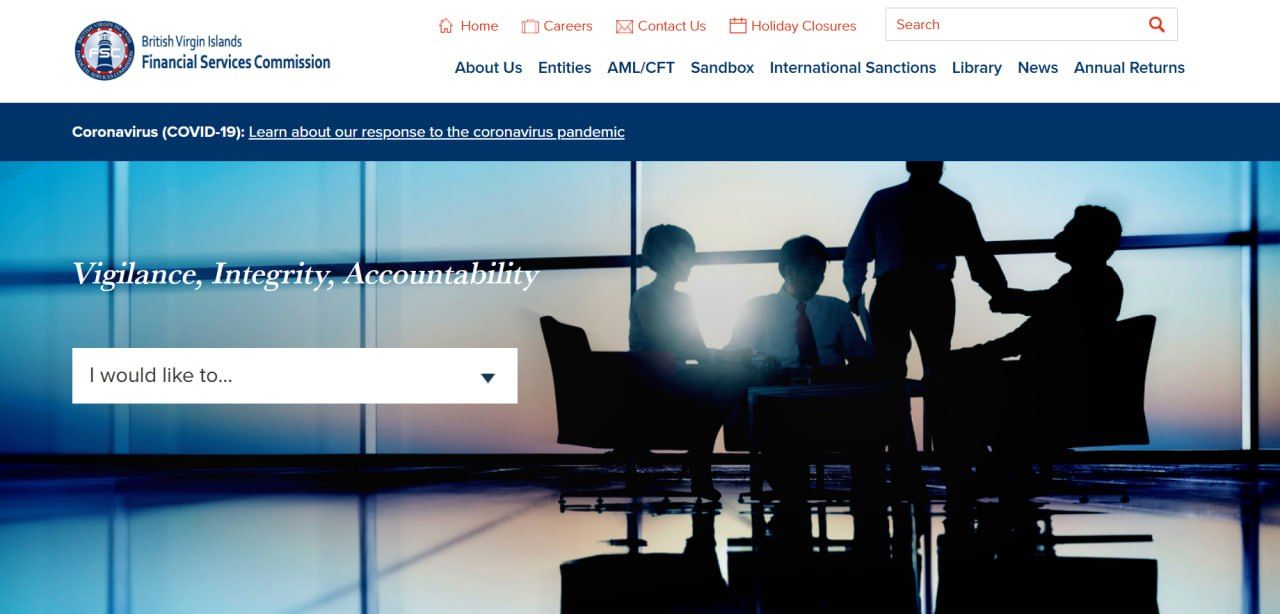
Image caption: Official page of the BVI FSC website for searching company files and conveying inquiries.
Another option is to contact the enrolled broker. They have admittance to internal setups and can confirm the current state of affairs. The broker will also explain why the firm was erased off and what phases need to be taken to reinstate the company's status. This is primarily vital if you have not followed the firm for a long time or have lost contact with the previous representative.
Once you have the data, you can decide whether to reinstate the trade in the polity or simply open a novel firm. But if the old firm had active undertakings or a bank account, it is better to start the reinstatement sequence swiftly. This will help preserve the firm's prerogatives in the polity and avoid losing mercantile connections.
Table 1. Comparison of reinstatement and novel enrollment of a firm in the polity
|
Parameter |
Re-establishment of a company in the BVI |
New Company Registration in BVI |
|
Saving the firm number |
Yes. The original firm ID and history are preserved. |
No - a new number is assigned |
|
Trade History |
The same story stays. This is vital for mercantile partners and undertakings |
History begins anew |
|
Mercantile connections and counterparties |
Possibility to handle current relationships |
We have to rebuild trust all over again. |
|
Are fines mandated to be paid? |
Yes - you need to pay off your annual bills and late bills |
No - enrollment occurs without debts. |
|
Necessity of files |
files mandated to reinstate a licit firm in the polity |
Standard files mandated to open a novel firm |
|
Duration of the procedure |
Longer - may take up to three weeks or more, primely if the exclusion is long-term. |
Faster - usually takes 1-5 days. |
|
Difficulty of passing |
Above - mandates approval from the supervisory authority, inquiries and surveys are possible |
Below is a clear procedure. |
|
Price |
Higher due to fines and reinstatement bills |
Average - only the cost of enrollment and broker |
|
Asset oversight |
It is possible to reinstate the firm's freedoms to the polity and regain admittance to resources. |
The old firm's holdings stay frozen |
|
When is it better to choose this path? |
If you need to reinstate the firm's status in the polity and preserve its history. |
If the old firm has been inactive for a long time |
Restoration sequence
Reinstating a company in the BVI is entirely possible—even if several years have passed since it was erased off or became dormant. Also, the longer the firm stays inactive, the more intricate and scrutinised the reinstatement sequence becomes. The Registrar may demand additional files or supply justification for refusal. Reinstatement is a formal licit sequence that re-establishes a firm’s licit status, allowing it to resume its schemes. It is prime to adhere to regional statutes and sequences throughout.
Timeframe and cost
Restoration is a relatively straightforward sequence, but the timeline and costs involved can vary contingent on several factors. On average, the reinstatement procedure takes between 7 to 20 business days, although this can fluctuate contingent on the Registrar’s current workload, the accuracy and completeness of the conveyed indentures, and the particular situations of the case.
- State bills: These are mandatory payments made directly to the BVI’s Registrar of Corporate Affairs for processing the reinstatement.
- Late payment sanctions: If the firm failed to remit its annual government bills on time, late bills will apply and must be settled as part of the reinstatement sequence.
- Professional service bills: These are charges from the enrolled broker or licit advisor handling the reinstatement. Their role typically includes arranging the mandatory indentures, communicating with the Registrar, and asserting the enrollment abides with all prime licit and procedural needs.
It’s also vital to note that the total amount payable may vary contingent on alterations to regional legislation or internal policies of the BVI overseers. Therefore, it's advisable to request an updated cost estimate before beginning the sequence.
To assert that your firm reinstatement proceeds smoothly and without unnecessary delays, it is highly recommended to work with experienced licit experts who are well-versed in BVI corporate law. A qualified lawyer or broker will assist in arranging and conveying the enrollment for firm reinstatement, guide you via the indenture collection sequence, and liaise with the Registrar to help secure approval as swiftly and efficiently as possible. This not only saves time but also minimises the peril of errors or omissions that could otherwise prolong the reinstatement timeline.
Next phases after reinstating a company in the BVI
Reinstating a company in the BVI should not be seen as the conclusion of the sequence, but rather as the start of a renewed chapter in its corporate lifecycle. Reinstatement merely returns the firm to licit standing—what follows is a vital sequence of actions mandated to fully reactivate schemes, safeguard holdings, and avoid the peril of future deregistration.
The first and most immediate task is to inform all prime stakeholders. This includes banks, insurers, trade partners, clients, suppliers, licit advisors, and enrolled brokers. Fiscal institutions, in particular, will mandate formal proof that the firm has been reinstated. This typically means conveying an official confirmation from the Registrar along with an updated certificate of incorporation. Clear and timely communication with these parties asserts that trust and functionality are reinstated swiftly.
Reinstatement must be followed by the unblocking of company holdings. If the firm’s bank accounts were frozen or if admittance to corporate holdings—namely stakes, real estate—was suspended during the termination, licit phases must be taken to reinstate full oversight. Most banks will insist on licit confirmation that the firm is no longer erased off and is not undergoing liquidation. Asserting asset admittance is a vital phase in resuming normal schemes.
Special attention should be paid to the accuracy and completeness of corporate indentures. All internal indentures—namely financier directories, director lists, meeting minutes, and statutory files—must be reviewed and updated. If any actions were taken in the firm’s name during the term it lacked licit standing, those decisions may now be subject to licit scrutiny. As a result, licit experts often advise revisiting key resolutions and re-drafting critical minutes to assert abidance and continuity.
To avoid repeated violations and assert stable operation, it is prime to establish a solid setup of corporate governance. This includes clear setups for internal oversight, regular communication with the enrolled broker, and diligent monitoring of filing deadlines and licit needs. A well-governed firm will not only avoid future disruptions but will also enjoy greater trust from trade partners and overseers alike.
Restoring a BVI company is not merely a procedural correction—it’s an opportunity to re-establish sound corporate foundations. With the right tactic and oversight, the firm can emerge stronger, more compliant, and better positioned for long-term success in a transnational region.
Final word
Restoring a company in the BVI is a vital sequence that enables trades to reclaim their licit standing and resume tasks seamlessly. The polity is renowned for offering a trade-friendly environment characterised by visibility, favourable excise conditions, and straightforward oversight. Also, if a firm has been removed from the official directory, it becomes mandatory to undertake a formal restoration procedure in line with the BVI International Company Regulations (ICR).
This sequence comprises several key phases and onuses. Firstly, a penalty must be settled for the late enrollment, reflecting the delay since the firm was erased off. Next, a formal enrollment for reinstatement must be conveyed, accompanied by all mandated indentures to satisfy supervisory demands. It is prime to note that the longer the interval since the firm’s deletion, the more intricate and demanding the reinstatement sequence tends to become.
Successfully checking the legal status of a company and navigating its restoration in the BVI demands not only meticulous attention to detail but also an in-depth knowledge of the regional licit landscape and procedural nuances. Having extensive experience in assisting with these sequences, I can attest that careful, methodical action without procedural mistakes is vital to avoid unnecessary delays or complications.
Our licit team offers comprehensive aid throughout the entire reinstatement journey. From the initial assessment of eligibility and needs to handling all indentures and liaising with the prime overseers, we assert the sequence is smooth and compliant. This professional assistance significantly reduces peril, saves valuable time, and guarantees adherence to all regional rules, giving you peace of mind and a reliable path to re-establish your company’s legal presence in the BVI.