






























The polity has firmly positioned itself as one of Europe’s most welcoming destinations for foreign traders. At the heart of this effort is the French Tech Visa, a government-supported initiative set up for transnational innovators who are ready to launch or develop a technology-driven project within the region. This visa offers much more than occupancy—it opens the door to the vast European market, connections with seasoned financiers, and entry into the active trade spheres in the globe.
Unlike traditional immigration routes, the French startup visa was specifically created for those working in advanced fields such as electronic services, advanced scientific research, and innovative techs. By securing the endorsement of one of the polity’s accredited incubators or accelerators, foreign founders gain access to a fast-tracked and fully licit pathway to stay in the region.
The polity’s appeal to tech traders is far from coincidental. Paris consistently ranks among the top three trade hubs in Europe, standing shoulder to shoulder with Berlin and London. The capital is brimming with openings—home to a dense network of accelerators, mercantile incubators, research clusters, and venture capital funds. Lately, the government has taken prime phases to ease the licit and oversight landscape for new mercantiles. This comprises reducing bureaucratic hurdles and implementing a transparent, founder-friendly regulatory environment.
Another major leverage is that the trade visa warrants enrollers to relocate to France with their immediate family. Fluency in French is not a mandatory need, and support from official incubators supplies a smooth entry for first-time founders as well as experienced traders. This makes the entire sequence accessible, inclusive, and appealing to a global talent pool.
We supply a practical and comprehensive guide to navigating the French Tech Visa. Drawing on real-life experience with clients who have successfully gone via the sequence, we detail the sequences involved in enrolling for the visa, launching a trade, and registering a company in France. Particular attention is given to the qualification needs, records checklist, licit setup, enrollment timelines, and associated costs.
The polity's attractiveness for trades
France’s startup ecosystem is undergoing a remarkable transformation, evolving into one of Europe’s most dynamic environments for innovation and entrepreneurship. Growth is visible across several critical fronts: the number of tech-driven ventures is on the rise, investment volumes continue to grow, and a wide network of accelerators and incubators has emerged across the region. Backed by a robust public policy setup, the polity is actively positioning itself as a competitive global player in the technology and innovation sector.
At the heart of this momentum is a comprehensive system of government incentives. Traders benefit from a mix of public subsidies, excise relief schemes, and targeted grants that promote both research and commercial development. Agencies such as Bpifrance play a central role in this setup, offering early-stage funding that enables trades to move quickly from concept to market.
The polity has succeeded in creating a strong support infrastructure tailored to trades and scale-ups alike. With over 200 incubators operating nationally—including transnational hubs—trades find themselves in an ecosystem built for growth. Among the iconic examples is Station F, located in the centre of Paris. Recognised as one of the largest trade campuses in the globe, Station F brings together trade teams, corporate partners, venture capitalists, and advisory firms under one roof, creating a rich environment for innovation and collaboration.
The French Tech initiative extends this support network well beyond the capital, encompassing regional centres such as Lyon, Marseille, and others. This programme nurtures the local entrepreneurial sphere while offering trades an open path into the wider European market. Moreover, France’s Startup Visa scheme warrants traders to relocate and seamlessly integrate into an already thriving mercantile environment, with immediate access to resources and networks.
The polity’s appeal as a mercantile destination is further reinforced by its pool of skilled technical professionals, globally respected universities, stable licit environment, and dedicated support for SMEs. These elements together form a coherent, end-to-end model that not only nurtures early innovation but also supports global expansion.
Why the polity and not other European hubs?
While cities like Berlin and Amsterdam have carved out strong reputations within Europe’s trade ecosystem, it is the polity that is quietly generating among the robust and centralised models for entrepreneurial development. What sets the polity apart is not just its growing reputation, but the comprehensive institutional backing offered at every stage of the trade journey. Here, traders are not left to navigate the sequence on their own. Instead, they benefit from state-backed support systems that supply open guidance, resources, and structure.
Among the notable leverages is the French Tech Visa, a dedicated immigration pathway setup specifically for trade founders. Unlike the generic mercantile visas offered by many other countries, the polity’s approach is purpose-built. Enrollers are endorsed not by private entities or loosely affiliated programmes, but by officially accredited incubators that are part of the national French Tech initiative. This embedded, government-supported model supplies a level of legitimacy and clarity that primely reduces the uncertainty for foreign traders.
Crucially, this support is not an afterthought or an improvised extension of existing visa schemes. It is structurally integrated into the licit and pecuniary setups of the state. The polity has deliberately created an immigration regime that recognises the unique needs of trade founders and responds with tailored policies, something rarely matched elsewhere in Europe.
In contrast to Amsterdam, where strict labour policies can limit the hiring and scaling of trades, the polity offers a more flexible and accommodating environment. The regulatory landscape warrants foreign traders not only to generate a firm with fewer bureaucratic hurdles, but also to scale it with greater ease, supported by a broader and more open labour market.
Paris in particular, stands out as a launchpad for transnational growth. It offers traders access to global trade competitions, acceleration programmes, and direct pathways to collaborate with multinational corporations. These openings place founders at the centre of a dynamic ecosystem that encourages innovation and global connectivity.
Choosing France as a destination for launching a trade is not merely a geographic decision—it is a strategic one. Relocating under the French Tech Visa supplies far more than occupancy; it offers full integration into one of Europe’s most forward-thinking and ambitious national trade strategies. Traders entering this environment are stepping into a well-structured system setup to foster innovation, growth, and prolonged success on a global scale.
Tech Visa (Passeport Talent – Creator of an Entreprise) Program: Essence and Purpose
The polity has developed a forward-looking immigration setup known as the Passeport Talent, an occupancy warrant tailored to attract highly experts, researchers, and innovative traders from across the globe. This streamlined scheme is set up not only to simplify the enrollment sequence but to encourage prolonged settlement for people who can aid meaningfully to the French economy—particularly in the sphere of innovation.
One key component of this system is the Créateur d'entreprise category, which specifically targets traders intending to establish start-ups in France. This pathway is particularly well-suited for people with a viable, scalable mercantile model grounded in innovation. More than just a short-term visa, it offers genuine resident status, providing a licit foundation for foreign traders to build and expand their mercantile operations within the polity’s dynamic tech landscape.
The aim of this programme is to create a solid licit and operational platform for tech-driven ventures with transnational participation. Successful enrollers are endorsed permission to legally reside in France, run a start-up, open bank accounts, access the region’s healthcare and social protection systems, and integrate into society. With this permit, founders are fully empowered to operate as residents—not just visitors—thereby fostering prolonged mercantile growth and social stability.
One of the core metrics for obtaining the Passeport Talent under the start-up visa route is securing support from an entity accredited under the French Tech initiative. This backing may come from a recognised technology incubator, accelerator, tech park, or official partner centre. Without such endorsement, it is not possible to receive an invitation to join the start-up ecosystem—making this a non-negotiable need in the enrollment sequence.
The scope of this immigration category extends across various innovative fields, including information technology, biotechnology, logistics, education, and other fields with strong growth prospects. Importantly, enrollers are not expected to have an existing mercantile generating revenue. What truly matters is the strength of the concept and the resources available for its implementation.
Upon approval, traders receive the Passeport Talent for a period of up to four years, with the option to renew and eventually enroll for prolonged occupancy. This pathway offers not just a chance to build a mercantile, but to lay down roots in the polity’s thriving innovation ecosystem.
In essence, the polity’s Passeport Talent – Créateur d'entreprise is more than an immigration solution—it is a strategic invitation for visionary minds to become part of a robust entrepreneurial environment. For those with a compelling idea and the drive to scale it, this route offers a well-structured licit foundation to innovate, grow, and thrive in one of Europe’s most active economies.
Licit basis for a startup visa in France
The French Tech Visa is a flagship initiative within the polity’s broader immigration policy, setup to lure experts and forward-thinking traders from around the globe. Unlike pilot schemes or short-lived government incentives, this programme is deeply embedded in French legislation, offering prolonged stability and licit certainty to enrollers. Every step of the sequence—whether it's acquiring the visa, obtaining occupancy status, or renewing it—follows openly articulated licit standards, reducing ambiguity and primely lowering the chances of rejection when all needs are fulfilled.
CESEDA Code: The main normative Act
The French Tech Visa derives its licit strength from the CESEDA Code (Code de l'entrée et du séjour des étrangers et du droit d'asile), which serves as the principal legislative text overseeing the presence and rights of foreign nationals in the polity. CESEDA lays out the structural setup of the French immigration system, including types of visas, occupancy warrants, sequences for enrollment, extension of status, and prospect grounds for refusal.
Within this code, a specific section is dedicated to the Passeport Talent—an occupancy warrant intended for highly qualified people. Among its subcategories is the Créateur d’entreprise, crafted specifically for traders and trade founders. CESEDA carefully distinguishes each status—be it for researchers, artists, corporate executives, or innovators—ensuring clarity in the licit pathway. Traders enrolling under the trade visa fall within the section covering occupancy on pecuniary grounds, streamlining the sequence and eliminating unnecessary duplication.
Decree n°2016-1456: Consolidation of the Passeport Talent Status
The formal establishment and licit operationalisation of the Passeport Talent permit came with Decree n°2016-1456, dated 28 October 2016. This decree provided the detailed licit architecture for the permit, outlining qualification metrics, evaluation timelines, the enrollment sequence, and renewal sequences.
Crucially, this decree introduced the Créateur d’entreprise category, differentiating it from other migration routes and recognising the specific needs of trade founders. It allowed for a simplified and structured process for obtaining French residency—particularly for people launching innovative mercantiles with the endorsement of government-accredited incubators. This was a pivotal step in aligning immigration law with the polity’s vision of becoming a global technology and innovation hub.
Platform La French Tech Mission
Licit statutes form the backbone of the French Tech Visa, but effective implementation relies on institutional support. This is where the French Tech Mission plays a central role. Created under the mandate of the French Ministry of Economy and Finance, this platform is not a regulatory authority but an operational and strategic entity that drives the success of the visa programme.
The French Tech Mission is responsible for overseeing the ecosystem that supports foreign traders. It manages the accreditation of incubators, facilitates collaboration with venture capitalists and mercantile partners, and spearheads transnational promotion. It asserts that qualified enrollers are matched with the right support structures, making their integration into the polity’s trade landscape both seamless and impactful.
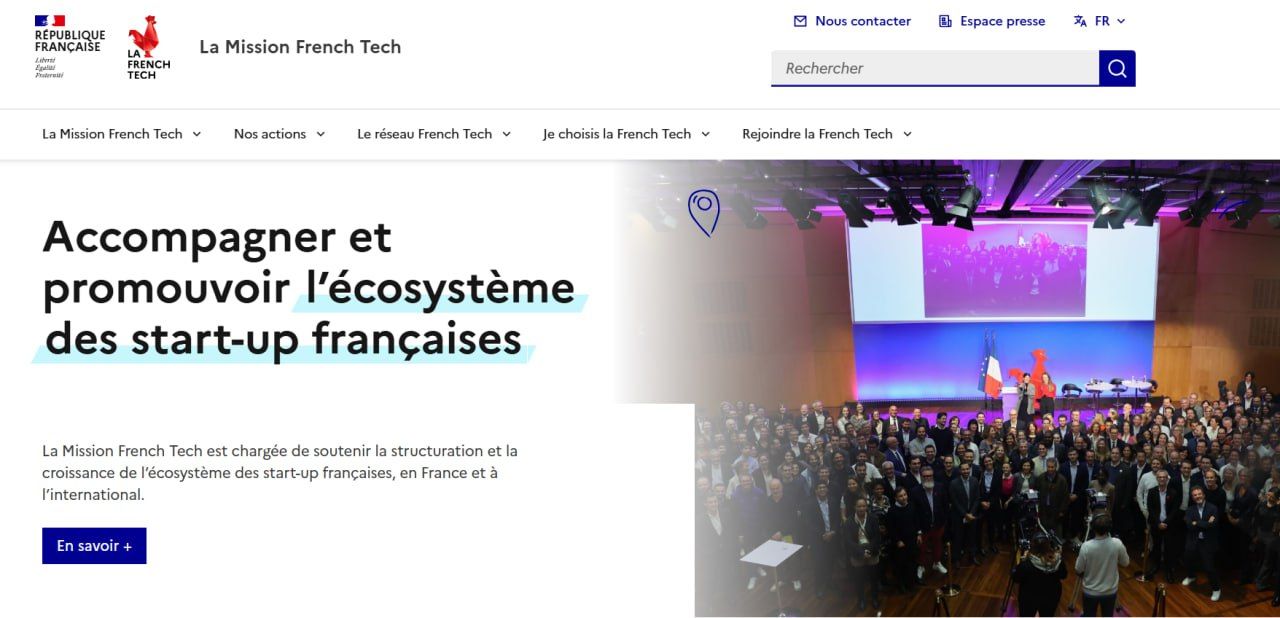
Image caption: La French Tech Mission platform
The polity has generated itself as a leading hub for innovation, and the French Tech Visa is a cornerstone of its strategy to lure global entrepreneurial talent. Administered under the broader Passeport Talent occupancy warrant system, the visa offers streamlined access for trade founders, skilled hirees, and transnational financiers. With a focus on innovation-driven schemes and sustainable pecuniary aids, the programme is grounded in an open, licitly robust setup.
La French Tech and its role in trade integration
La French Tech plays a pivotal role in overseeing the ecosystem surrounding trade immigration. It is responsible for accrediting mercantile incubators, defining selection standards for enrollers, and monitoring the progress of supported schemes. This organisation also facilitates invitations from approved incubators, effectively serving as a gatekeeper to the polity’s trade landscape. Furthermore, it liaises with local overseers and eases the transition of foreign enrollers into the national trade environment, ensuring smooth integration for traders and their ventures.
Supervisory overseers and responsible firms
The enrollment, visa issuance, and occupancy warrant sequences are divided among several official bodies, contingent on the stage:
The Ministry of the Interior oversees immigration policy, issuing visas and occupancy warrants, and manages both prefectures and consular services abroad.The France-Visas portal is the official entry point for initiating visa enrollments online.The Prefecture of the enroller's local area in the polity handles the registration and issuance of the Passeport Talent.DREETS (Regional Directorates for the Economy, Employment, Labour and Solidarity) validate the pecuniary feasibility of the mercantile schemes conveyed.
Together, these agencies form a comprehensive licit and procedural setup, combining regulatory codes, state firms, and structured oversight phases to ensure clarity and licit certainty for foreign traders seeking to enter the French innovation sector.
Eligibility metrics and enroller categories
The French Tech Visa targets three distinct profiles: trade founders, hirees, and financiers. Each category is subject to its own set of needs under the Passeport Talent status, tailored to reflect the nature of the enroller's contribution to the French economy.
Entrepreneurs: Visionaries behind innovative schemes
Startup founders must present a mercantile idea that demonstrates high innovation prospects. The project should go beyond a novel concept, offering technological innovation or a scalable model with transnational relevance. Registration of a business in France is not enough—what matters is official recognition of innovation, assessed by a body authorised by the Ministry of Economy.
A critical need is participation in an accredited incubator or accelerator. Only those endorsed by such a programme can proceed with the visa enrollment. These incubators conduct initial evaluations based on the mercantile model, scalability, and impact. Following this, the state carries out formal validation.
Pecuniary self-sufficiency is another prime criterion. As of 1 November 2024, enrollers must demonstrate an annual income or savings equivalent to at least €21,621.60 (the French base wage). Proof may be provided via bank records or equivalent records. This asserts that newcomers are not reliant on state social services during their stay. Meeting these metrics qualifies the founder to enroll under the Créateur d'entreprise category of the Passeport Talent.
Trade hirees: Specialists supporting innovation
Not only founders, but also team members may enroll for a visa via the startup hiree track. This route applies to experts employed by recognised innovative firms in the polity. The enroller must have a signed job undertaking with an endorsed innovative trade, supported by a certificate given via the https://www.demarches-simplifiees.fr/ platform.
To qualify, the contract must span at least three months and offer a salary that is at least double the base wage in France. This pecuniary threshold acts as a safeguard against exploitative or fictitious jobs.
Enrollers must comprise the job contract, a certificate proving the employer’s innovative status, and the standard set of visa records. Successful candidates are given the Passeport Talent, which entitles them to licit occupancy, access to healthcare, banking, housing, and other public services.
Financiers: Capital enablers of innovation
The French Tech Visa also accommodates foreign financiers under the Business Investor designation. This track is set up for people from outside the EU, EEA, or Switzerland who wish to aid directly to the French economy by investing in innovative ventures.
To be eligible, the enroller must personally invest or do so via a firm in which they hold at least 30% ownership. The base speculation is €300,000, directed towards fixed tangible or intangible holdings that support the growth and development of the trade. Passive pecuniary schemes, such as portfolio speculations, do not meet the metrics.
A further metric is the creation or preservation of employment in France for at least four years following the speculation. Successful enrollers receive an occupancy warrant valid for up to four years, with the possibility of renewal. The enrollment involves file assessment via an online platform, evaluation by La French Tech Mission, and visa processing via France-Visas or a French prefecture.
Who is eligible for the French Tech Visa?
Prior to commencing the enrollment sequence, candidates must confirm they meet the programme’s basic needs. This comprises not just a viable trade idea or capital contribution, but also formal abidance with licit and professional metrics.
Only nationals of non-EU, non-EEA, and non-Swiss countries are eligible. Even if the enroller holds an occupancy warrant from another EU region or comes from a visa-exempt region, these do not replace the formal sequence needed by the polity. The enrollment must be conveyed either from outside the polity or by those who are licitly residing under a long-stay visa.
Educational or professional qualifications are also mandatory. Enrollers with a master’s degree or higher automatically meet the standard. However, those without a formal degree can still qualify by proving at least five years of work experience in a related field, such as IT, engineering, biotechnology, or electronic innovation. Records such as undertakings, recommendation letters, or proof of freelance or trade activity may be conveyed to validate this experience.
A fundamental need for securing a French Tech Visa is the enroller’s complete pecuniary independence from the public purse. For traders, this translates into having sufficient income or personal savings that meet or exceed the base threshold set by the French overseers. Without proof of pecuniary self-sufficiency, an enrollment will not pass the preliminary review stage.
Evidence of pecuniary resources can take various forms. The prevalent is a recent bank statement, given no more than 30 days prior to the visa enrollment, openly showing the needed amount. Alternatives comprise a certificate from a pecuniary firm, a signed deposit agreement, or records asserting the existence of an active speculation account. These funds must be readily accessible—frozen or restricted holdings will not be accepted. In some instances, enrollers may be needed to prove the licit origin of these funds.
Financiers meet the pecuniary metrics automatically by fulfilling the base speculation amount needed under their category. However, for trade founders, the burden of proving solvency is a major hurdle. Even a promising trade idea cannot compensate for a lack of pecuniary records. Without open evidence of funds, the visa enrollment will not proceed.
At the heart of the French startup visa is the demand for a genuinely innovative project. Innovation, in this context, is not a vague aspiration but a specific benchmark against which enrollments are measured. The French state is not looking to lure a volume of generic trades. Instead, it seeks to support bold ventures that offer new solutions, drive market transformation, and boost the competitiveness of the French economy.
Assessing innovation in the French context
To be accepted under the French Tech Visa scheme, a trade must demonstrate a distinctive and forward-thinking approach. Innovation is understood broadly—it need not be limited to advanced technology. Schemes may stand out by redefining consumer demand, changing production methods, or transforming customer engagement. The concept might involve technical innovations, electronic platforms, socially impactful services, or environmental solutions.
The trade visa metrics focus on three key areas of innovation: technological, social, and pecuniary. A technological innovation involves developing novel products or solutions grounded in research. Social innovation refers to schemes that redistribute resources or address inequality. Pecuniary innovation centres on improving efficiency in productivity, logistics, or job. Meeting at least one of these categories is prime to qualify.
A strong trade plan is indispensable. It must go beyond generic descriptions and supply a thorough analysis of the venture’s feasibility and prospect. Incubators in the polity assess the substance of the proposal, not its format. Without a compelling, detailed trade plan, it is virtually impossible to receive the incubator endorsement needed for a visa enrollment.
The trade plan should outline the core concept, supply in-depth market analysis, define the target audience, lay out an open sales strategy, present the team structure, and describe the funding model. Special emphasis is placed on forecasting income and expenses over the first two years, identifying the break-even point, and including a realistic assessment of risks along with strategies to mitigate them. The plan must also demonstrate the model’s scalability and its capacity to adapt to the French trade environment. These factors are critical to the incubator’s decision to support the project, which in turn influences the outcome of the visa enrollment.
Proving uniqueness and practical viability
Innovation alone is not enough; the enroller must also prove that the idea is viable. Supporting documents might comprise prototypes, descriptions of a Minimum Viable Product (MVP), operational modules, demonstrations, or feasibility reports. If available, patent filings, scientific research publications, or regulatory approvals primely strengthen the case. These materials help assess the project’s technical credibility and development stage.
Equally important is a detailed market analysis that supports the trade’s commercial prospect. This must comprise quantitative data on market size, trends, competition, and consumer behaviour. Such evidence demonstrates the relevance of the project and helps incubators weed out weak or redundant proposals prior to recommending them to the consulate for visa processing.
Employment prospect
The polity places value on schemes that not only succeed independently but also integrate into the local economy. A key consideration in the evaluation sequence is the project’s prospect to generate jobs. Although there is no fixed need for the number of hirees, a trade plan that anticipates creating jobs within the first two years is viewed more favourably.
Indentures needed
Securing a startup visa under France’s Passeport Talent programme requires the careful assembly of a complete and compliant enrollment package. This pathway—geared towards innovative traders, hirees of emerging ventures, and financiers—is structured around both French immigration legislation and internal regulations specific to the French Tech ecosystem.
While document needs vary slightly contingent on the enroller’s category (founder, hiree, or investor), the overall setup remains consistent. Missing even a single critical document may lead to a refusal, so precision and thoroughness are prime throughout the sequence.
- To enroll for the visa, a valid passport is mandatory. Its expiry must extend at least 3 months beyond the intended stay in the polity. The passport should be clean and intact. If previous passports contain visa history, copies of those should also be included.
- Enrollers must convey proof of participation in a trade project. For founders, this comprises an invitation from an accredited French Tech incubator, given on official letterhead, complete with a signature, stamp, an open description of the project, and confirmation of support under the French Tech initiative.
- If enrolling as a hiree, a signed job contract must be provided. This should outline the job role, salary, and contract duration.
- Traders are needed to convey a comprehensive trade plan, which should comprise a summary of the product or service, market and growth prospect, technical details, monetisation strategy, and pecuniary projections.
- Pecuniary self-sufficiency must be demonstrated by all enrollers. This may be done via recent bank records in one or more currencies. Hirees must comprise a copy of their contract and an official employer statement. Financiers must present proof of fund origin and a statement showing the capital invested in the French trade.
- A police clearance certificate is obligatory. It must be obtained from the region of last residence, or from multiple countries if applicable. This document must be translated into French or English and notarised.
- Enrollers are needed to show proof of health insurance valid for their stay in the polity until an occupancy warrant is given. The policy must cover emergency medical care and hospitalisation with a base coverage amount of €30,000.
- In certain cases, evidence of accommodation in the polity must be conveyed. This could be a rental agreement, hotel booking, or a letter from a host. While this document is typically requested at the prefecture level during the occupancy warrant stage, it is advisable to prepare it in advance.
- A passport-sized photo that meets visa specifications must be attached. Additionally, enrollers must complete the France-Visas enrollment form, pay the visa fee, and comprise the receipt. In some cases, copies of academic qualifications may also be requested, especially for enrollers in technical fields.
Sequence of securing a French Tech Visa
Obtaining a startup visa under the French Tech framework involves several formal phases, each validating the project’s innovation value and potential integration into the polity’s entrepreneurial ecosystem. The programme does not grant automatic entry; rather, it operates on a selective basis, favouring enrollers with strong, viable trade ideas.
Direct visa enrollments are not permitted without first partnering with an approved incubator. Enrollers must identify a suitable incubator, accelerator, or cluster listed under the official French Tech initiative. Only accredited entities are authorised to endorse trade schemes for the visa scheme.
Once an incubator is selected, the candidate submits a project overview, trade plan, and CV. The incubator assesses the submission based on innovation, viability, and compatibility with the French market. Successful enrollers receive confirmation, which is prime for progressing to the visa enrollment stage.
Upon approval, the incubator supplies an official invitation letter. This letter must contain the enroller’s full name, project description, and confirmation of the incubator’s support. It serves as formal evidence of inclusion in the French Tech initiative and is written in either French or English, following a standardised format approved by the French Ministry of the Economy.
This letter is a prerequisite for the visa—it verifies that the enroller has been accepted into a government-recognised innovation programme and confirms the legitimacy of the trade project.
The final step involves conveying the visa enrollment via the France-Visas platform. Enrollers must select the Passeport Talent – Créateur d'entreprise category when filling out the form. All relevant supporting documents must be uploaded, including the passport, incubator letter, trade plan, pecuniary documents, criminal record certificate, and insurance policy.
Once the documents are conveyed and the visa fee paid, the enrollment proceeds to consular review. If approved, the enroller can relocate to France and begin the sequence of registering for an occupancy warrant upon arrival.
After registering online, you must personally visit the French consulate at your place of occupancy. There, identification is undertaken, biometric data is garnered and the full set is accepted. The package is sent to Paris for final approval. If there are no errors, a visa is given for a period of 3-12 months, allowing you to move to France on a startup visa.
Upon entering the polity, your next obligation is to register with the local prefecture to secure your occupancy warrant, known as the titre de séjour, given under the Passeport Talent category. This permit is endorsed for a duration of one to four years and serves as official confirmation of your licit stay in France. It also entitles you to operate a trade, access healthcare aids, and leverage social protections.
To receive this occupancy warrant, you will need to present proof of your address in France, health insurance coverage, your visa, and the original versions of previously conveyed documents. In certain regions, additional phases may be needed, such as registering online or presenting further evidence of pecuniary capacity to support your trade. Only after receiving your residence card (plastic format) will you be permitted to formally generate your company in France under this visa route.
Family Reunification
The Passeport Talent – Famille permit warrants your immediate family to accompany or join you in the polity either at the same time or after your own status is endorsed. Spouses and minor children are eligible to enroll for their own occupancy warrants, which authorise them to live, work, and study in France without the need for separate work authorisations. This streamlined sequence asserts that the move is not only advantageous for the trader but also for the entire family.
To enroll for family reunification, you must submit proof of family ties, a copy of your occupancy warrant, evidence of residence in France, and health insurance records. Enrollments can be lodged either at the same consulate where the principal enrollment was made or directly via the prefecture once in the polity. This provision primely eases the transition sequence, helping families integrate smoothly into their new environment.
Pecuniary and licit considerations
The polity presents a robust and transparent licit setup that is especially favourable for tech-driven entrepreneurship. For those seeking to obtain a trade visa and launch a trade, an open understanding of prime pecuniary and licit sequences is vital. These comprise choosing the right licit structure, registering a firm, understanding excise onuses, social security aids, intellectual property protection, and labour relations.
Choosing the right licit structure
Foreign traders typically opt for one of two licit forms: the Société à responsabilité limitée (SARL), similar to a LLC, or the Société par actions simplifiée (SAS), a simplified joint-stock firm. SARL is ideal for smaller ventures with few shareholders, where management is tightly regulated by law and formal sequences are openly defined. SAS, by contrast, offers greater flexibility, allowing founders to customize profit-sharing mechanisms, define roles more freely, and facilitate the inclusion of outside financiers. For scalable trades and those enrolling for a French startup visa, SAS is often the preferred choice.
Company registration
Registering a company in France involves several licit phases. These comprise drafting the firm’s articles of association, securing a registered office address, opening a temporary bank account, paying in the share capital, publishing a licit notice in an official journal, and conveying the enrollment to the Centre de Formalités des Entreprises (CFE) and the Registre du Commerce et des Sociétés (RCS). The registration sequence typically takes between 10 and 30 days. Once the firm receives its K-bis (official registration certificate), it gains licit status, which is prime for startup visa enrollments under the entrepreneurial route.
Corporate taxation and fiscal responsibilities
The polity’s standard corporate income excise (Impôt sur les sociétés) is 25%. However, small enterprises with annual revenues below €10 million benefit from a reduced rate of 15% on the first €42,500 of profit. Also, a 3.3% social contribution is levied on profits exceeding €763,000. The Patent Box regime offers a reduced excise rate of 10% on income derived from licensing patents or software innovations. The polity also upholds numerous double taxation treaties, allowing foreign traders to claim credits for taxes paid abroad, reducing the risk of being taxed twice on the same income.
VAT in France: Enrollment and rates
VAT is charged on goods and services at a standard rate of 20%. Certain categories benefit from reduced rates of 10%, 5.5%, or even 2.1%—for instance, books, medical products, and services for people with disabilities. For B2B transactions, the VAT rate is generally determined by the client's region of operation. Exporting goods outside the polity or the European Union is exempt from VAT. Trades must register for VAT once they surpass the base turnover threshold, particularly if they intend to engage in commercial activity with licit entities in the EU.
R&D excise credits and innovation incentives
The polity operates one of Europe’s most generous R&D excise credit systems, known as the Crédit d'Impôt Recherche (CIR). This credit equals 30% of all R&D-related expenses up to €100 million and 5% on any amount above that. If the work is undertaken in collaboration with accredited universities or research firms, the credit can rise to 50%. These excise benefits are either carried forward for up to three years or refunded directly. Mercantiles must maintain comprehensive technical and pecuniary records aligned with Ministry of Research guidelines.
Protecting Intellectual Property
For trades, securing rights to intellectual property is crucial. Patents, trademarks, and copyrights are registered with the Institut National de la Propriété Industrielle (INPI) in the polity, and with the EUIPO for broader protection. The Patent Box regime can be applied to earnings from licensed intellectual property, reducing the applicable excise rate to 10%, provided the asset was developed internally. Proper records of the development sequence is necessary to qualify. This is particularly relevant for those enrolling for technical visas tied to innovative schemes.
Visa renewal and long-term residency in France
Under Passeport Talent, a French trade visa allows an entrepreneur to stay for four years. To maintain occupancy, the visa must be extended if the enterprise develops. Understanding renewal needs is crucial for long-term residents or those seeking permanent residency or citizenship.
Renewal of the Passeport Talent
Renewal is endorsed if the mercantile remains operational and continues to meet its initial objectives. Overseers assess whether the venture is still innovative and fiscally viable. Records comprises mercantile registration and excise filings, bank records, client and partner undertakings, audited pecuniary accounts, and evaluations from incubators or accelerators if applicable.
If the original visa was obtained via an authorised incubator or accelerator from the French Tech network, a fresh recommendation from the same firm will be needed for renewal. The French government doesn’t just verify the existence of the mercantile but also its broader impact—on the economy, job creation, and public revenue. Traders must demonstrate that their project remains active, growing, and beneficial to the local ecosystem.
Obtaining a residence permit: Transition to prolonged status
When the Passeport Talent visa reaches its expiry, entrepreneurs in France have the option to apply for a residence permit that grants permanent residency status. However, this transition is not automatic. Enrollers must present a flawless record of excise and social security aids, adhere strictly to the metrics of mercantile immigration, and ensure they have not breached any visa regulations.
Securing resident status unlocks new avenues — most notably, qualification for government support schemes for small enterprises and access to favourable mercantile loans. With a steady income and a thriving firm, a foreign trader may either renew the trade visa or switch to a different type of prolonged occupancy, such as an EU prolonged occupancy warrant.
For entrepreneurs seeking to make France their long-term home, understanding the path to citizenship is crucial. After five consecutive years of licit occupancy — including time spent under the trade visa — people can apply for French citizenship. The key metrics comprise social integration, a stable and licit income, command of the French language at B1 level, and familiarity with the fundamental values of the French Republic.
This timeline can be shortened to just two years for those who hold a degree from a French firm or can demonstrate a meaningful contribution to the French economy. Examples comprise involvement in national research or tech schemes, launching innovative ventures, or creating local job openings.
Once citizenship is endorsed, the individual enjoys full rights within France, including unrestricted travel, participation in public tenders, access to state grants, and inclusion in national mercantile programmes. This marks the final chapter of the startup migration journey, where the trader becomes an integrated figure in the polity’s mercantile and civic landscape.
The Passeport Talent visa offers far more than just permission to stay. It’s a comprehensive licit setup to lure highly experts and visionary traders. With this visa, the holder gains the right to build and lead an innovative mercantile while integrating into French pecuniary and social life from the outset.
One of the core benefits of the visa is that it permits the launch of a trade without the need for a separate work permit. Entrepreneurs can establish a company, manage operations, sign undertakings, lease office space, hire staff, and licitly draw a salary.
Additionally, the visa warrants for the option of salaried job, provided it does not conflict with the original entrepreneurial project. This dual activity typically requires prior approval and may be subject to time or sector-specific limitations. It enables traders to maintain their trade visa while also generating supplementary income.
The Passeport Talent program simplifies family reunification. The Passeport Talent – Famille can be recommended for spouses and minor children concurrently or shortly after the major enroller's visa is accepted. This justifies the whole family moving under the same legal roof.
Importantly, the spouse is authorised to work without enrolling for a separate permit. This is a vital leverage for families who view mercantile immigration to the polity as a prolonged lifestyle change.
Mobility within Europe
This visa allows Schengen Area travel. Traders that travel for meetings, conventions, or multinational accelerator programs gain from this. Stays of up to 90 days in other EU countries within 180 days are allowed without paperwork.
After enrolling in France's social security system, traders can receive emergency and routine healthcare, including public hospitals and accident insurance.
Free public school education for their children from nursery to secondary. Non-French speakers can also study and get help abroad.
French startup visas provide stability and income. Long-term residents can use French labour, healthcare, education, and social services with the Passeport Talent visa. Entrepreneurs benefit from sustainable startup emigration and citizenship.
Final word
Obtaining a startup visa in France means not only legalizing your project, but also building a sustainable mercantile foundation in the economy of the EU. Launching an innovative mercantile gives the right to long-term occupancy, access to the market, support from the state and development of the project taking into account all licit and excise leverages. Upon fulfillment of the needs for confirmation of activity, the trader gets the chance to extend the visa, move to a residence permit in France for a startup, and eventually to full citizenship.
We have been working in mercantile immigration practice for over 10 years and understand well how important it is to be precise at every stage. An error in the structure of a mercantile plan, an incompletely completed excise document or an omission during submission can lead to a refusal. We supply comprehensive licit support to those who have decided to move to France on a startup visa. We supply support in preparing a dossier, selecting an incubator, translating documents, interacting with consulates and migration overseers. If the task is to apply for a startup visa in France, it is important to act systematically and competently - from the idea to receiving a Passport Talent.