
























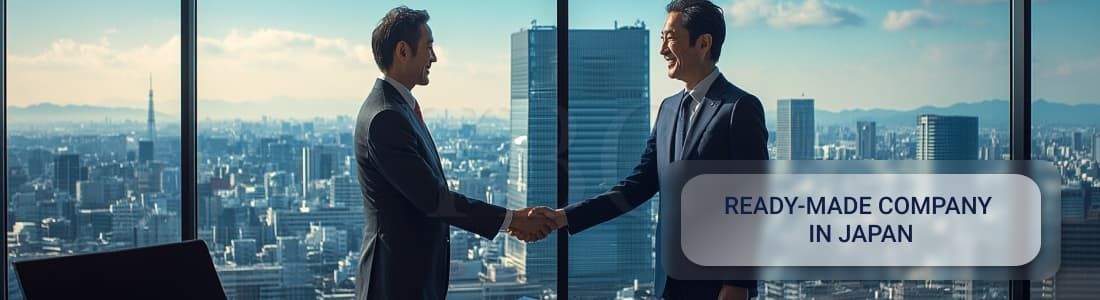



When you buy a ready-made company in Japan, you are going into a fully registered legal body that is ready to do business. These companies usually exist on paper only — no real operations behind them — yet they come properly equipped. Charter documents are in place, registration numbers assigned, and bank accounts already opened. Everything that normally takes months is already done.
This option is especially attractive for those who want to skip the long bureaucratic marathon that comes with setting up a new company from scratch. Acquiring an off-the-shelf business in Japan saves time, reduces early-stage risks, and lets you move straight into project execution while staying fully aligned with local legal rules.
One of the main reasons operating Japanese companies are in such demand is the dramatic cut in launch time. There’s no need to wait months before you can actually start. When you buy a registered company in Japan, business begins almost immediately — not someday later, but now.
This approach works particularly well for foreign investors who prefer to avoid administrative delays and enter the market fast. Owning an existing Japanese company gives more flexibility and a stronger sense of legal certainty. These entities have already passed the required checks, which removes a layer of uncertainty from the equation.
Unlocking Speed and Stability: The Advantages of Buying an Existing Japanese Business
The primary benefit is the significant conservation of time and effort. Acquiring a registered corporation in Japan means that all preliminary procedures have already been completed. No bureaucratic complexities, no delays – only a system that is operational and ready for use.
Another strong benefit is the presence of an established business reputation. When you buy an operating business in Japan, you may also inherit existing relationships — clients, partners, suppliers, and other stakeholders who already know the company.
It is clear that the company is different if it has a strong reputation and a stable place in the market. When you buy a Japanese company that is already set up, you often also get access to real assets. This can include equipment, patents, trademarks, and other intangible value. Active contracts with suppliers, landlords, and clients add an extra layer of stability, supporting cash flow from the very first day.
Buying a Business in Japan: Checking the Laws Before You Sign Anything
When you take over a working company in Japan, the legal side isn’t “paperwork later.” It’s the deal. Different business forms come with different rules, and ownership transfer has its own strict choreography. So before you get excited about speed and “ready-made,” you need to know which laws will actually shape your purchase.
Next comes consumption tax. How does the company calculate it, report it, and pay it? If the business touches international trade, the bookkeeping can get tricky fast. Sometimes you inherit a system that “sort of works” until it doesn’t. And if the company owns property, you also factor in land and real estate taxes. Those bills don’t care that you’re a new owner.
Ownership transfer itself is a separate topic, and Japan treats it seriously. You don’t just “buy it and go.” The rights must be re-registered correctly, step by step, and the process depends on the company’s legal form. Along with the company, you may also inherit responsibilities tied to that structure. After the transaction, the updated details must be reflected through the Ministry of Justice registration process.
Corporate governance rules matter too — especially if the company isn’t in perfect financial shape. If there are debts, overdue payments, or signs of instability, you review the legal framework around bankruptcy and reorganization. These laws define what happens when a company cannot meet its financial obligations. And one thing is non-negotiable: confirm the firm is not already inside bankruptcy proceedings. If it is, the entire “ready-to-run” story changes tone immediately.
Japan also has formal reorganization tools for businesses under pressure. They can be used to restructure debt and stabilize finances. When you invest in an existing company in Japan, it makes sense to consider whether that path could ever be relevant — even if you hope you’ll never need it.
If the business sells to consumers — retail, services, anything public-facing — consumer protection rules are not decoration. Product information must be accurate. Guarantees must be honored. Returns must be handled the right way. If your plan touches these sectors, you verify compliance upfront, because fixing it later usually costs more than doing it right from day one.
Then there’s labor law. Employee rights are protected, and the obligations are real. Before buying a Japanese operating business, you review employment contracts and confirm the company meets its duties: wages, paid leave, and pension-related commitments included.
Finally, environmental regulation. Japan doesn’t play casual here. If the business creates pollution risk in any form, you check whether it meets environmental standards and what penalties apply if it doesn’t. This is the kind of issue that can quietly sit in the background — and then hit your budget like a hammer.
Choosing a Ready-Made Company in Japan: Picking the Right Legal Shape
When you buy a ready-made company in Japan, the “type” you choose isn’t a small detail — it’s the frame your whole business will live in. Japan offers several legal forms, and each one comes with its own personality: strengths, weak spots, and a different level of administrative weight.
Ready-made joint-stock companies are a strong match when the plan is bigger than “local operations.” They work well for projects aiming to scale, play at a higher level, and eventually step onto international markets. This format also attracts entrepreneurs who want to raise outside capital and build a more structured corporate setup.
A joint-stock company must have a board of directors and hold an annual shareholders’ meeting. If you simply need a company with a registered name and clean documentation, you can buy a shelf company in Japan. If you’re buying an active business instead, the transaction usually becomes more demanding — you’ll need to check core operational details and, most importantly, debt exposure.
Ready-made limited liability companies are a different story: lighter, more flexible, and often a better fit for small and medium-sized businesses. Management is simpler because the company can have one founder or several. There’s no mandatory board of directors, which makes the structure easier to run and typically cheaper to maintain.
You can buy an active company in Japan in this format as well, especially if it already has stable income and live contracts. Ownership transfer is usually more straightforward, and you don’t need to involve a large pool of investors to make the model work.
Beyond these two, Japan has other legal forms, though they’re used less often. There are institutions, associations, and foundations designed for non-profit goals. You’ll also see cooperative joint-stock models and consortia, where multiple companies unite to deliver one shared project.
Buying a Business in Japan: How the Deal Actually Happens
A purchase of a functioning company in Japan isn’t a single signature moment — it’s a layered process with legal checkpoints built in. If the goal is a safe and efficient acquisition, you follow the rules carefully. Below are the core steps most deals move through.
Deal Preparation Stages
Before signing anything to buy a company in Japan, preparation matters. It’s what keeps legal and financial risk from sneaking into your new “ready-made” asset. The buyer usually runs a full review of contracts, agreements, IP rights, and assets. It’s also critical to confirm the company isn’t caught in litigation and has no unresolved claims hanging over it.
Financial review comes next: balance sheet, profitability, assets, liabilities, and debt. After that, the company’s market reputation gets checked — not as a formality, but as a real indicator of how the business is perceived. Before you buy an operating company in Japan, you also confirm legal compliance with local rules and standards. Competitiveness matters too, so it’s smart to look at the client base, suppliers, and key partners.
Once the evaluation is on the table, negotiations begin. The parties discuss price and payment terms, decide how assets and obligations are allocated, and agree on practical details: staff transfer, property rights, and other deal-critical elements. After that, the draft sale agreement is prepared.
Signing the Sale and Purchase Agreement
To buy a ready-made Japanese company, both sides must sign a formal sale and purchase agreement. The contract states the exact deal value and how payment will happen — a single payment or installments. The seller typically confirms the company has no hidden debts, lawsuits, or other undisclosed problems. The agreement also sets the conditions under which the deal can be terminated.
Then comes the transfer of assets and obligations. The tax side of the transaction is also a key point: buyer and seller need to agree who pays which charges, and whether they relate to the period before closing or after it.
Registering Changes in the Corporate Registry
This is the final step when buying a functioning business in Japan. After the contract is signed, the required administrative procedures must be completed so the ownership transfer becomes official.
All updates must be registered in Japan’s legal entity registry. A document package is prepared and filed with the relevant local authorities. The registration office reviews the submission — the timeline is typically anywhere from 5 days to 1 month, depending on deal complexity and how clean the paperwork is. Once approved, an official confirmation is issued.
Prior to the completion of the acquisition, ensure that all applicable taxes have been settled. If the company operates within a regulated sector, the relevant authorities must be informed of the ownership change, and any necessary new approvals or permits may need to be obtained.
Buying a Company in Japan: Nailing the Legal Requirements Before the Deal Turns “Real”
Japan technically lets you start with almost nothing: the minimum charter capital is 1 JPY (around 0.0064 USD). Yes, that’s not a typo. But if you want the company to look credible — to a bank, to a landlord, to a future partner who actually checks details — that “1 yen company” vibe won’t help. In practice, many owners set the initial capital somewhere around 1–10 million JPY (roughly 6.4–64 thousand USD) simply to look like they mean business.
When you buy a ready-made company in Japan, the very first thing you check is how the capital is documented. Not what someone claims in a chat, but what’s properly recorded. The amount must fit legal requirements, and the formation must be clean. After that, taxes. Every Japanese company deals with corporate tax, and the buyer’s job is to confirm that the company isn’t walking around with unpaid obligations. Ask for reports. Look for gaps. Verify whether anything is overdue.
Next: the address. A Japanese company cannot “float.” It must have a legal address inside Japan. That could be a real office lease, or a virtual address if the model doesn’t need physical presence. Either way, the address must be legitimate, and the paperwork must prove the right to use it.
If you’re a foreign buyer, the pressure goes up a notch. You need to confirm the company is legitimate, and that the lease or ownership documents for the address are valid. Many deals are handled through a local representative or a Japanese legal firm — not for decoration, but because formalities in Japan are not a place to freestyle.
There’s also the practical question of who runs the company. You’ll need a valid visa that permits business activity, or you’ll appoint a local director to handle management. And when you’re preparing to purchase a functioning company in Japan, the paperwork stack usually covers:
- charter review and alignment
- extracting official details from the commercial registry
- translation into English and/or Japanese
- notarization where required
- checks of reports, tax history, debt, and court records
- careful drafting of the sale and purchase agreement
- fixing every term with the seller (no “we’ll sort it later”)
- registering the post-deal changes in the official registry
Acquiring a corporation in Japan as a non-resident requires meticulous attention to detail. Local regulations do not tolerate negligence, and tax authorities do not incentivize unwarranted optimism. Robust expert assistance ensures the transaction remains unblemished and aids in circumventing issues that may arise post-payment.
Checking a Japanese Company Before You Buy It: Due Diligence That Actually Protects You
If you want a business that behaves like an asset — not a trap — you dig deep before you take ownership. That means proper legal due diligence, not a quick glance at documents.
Start with the charter. Does it match Japan’s legal standards? Then move to the founding paperwork: is it complete, authentic, consistent? After that, confirm the current owners have the right to sell. This is where you verify shareholder stakes and how ownership is split. A serious review of an operating company in Japan at this stage often exposes quiet issues: missing approvals, messy obligations, or legal baggage that isn’t mentioned unless you ask the right questions.
Financial audit comes next, and it’s non-negotiable. You’re not buying “a story,” you’re buying numbers. Check whether the company owes money to Japan’s tax authorities. Confirm that income and expenses are supported by real documentation.
Then check liabilities: loans, penalties, disputes, court claims — anything that can follow the company after transfer. If your goal is to buy a functioning Japanese company with your eyes open, bring in independent specialists. And don’t limit yourself to documents. Reputation matters, and it’s often easier to spot through people than through paper. Speak with partners, staff, and anyone connected to the company. Their tone will tell you a lot — sometimes more than their words.
Collecting Documents to Buy a Business in Japan: Request, Verify, Translate
Putting money into a ready-made company in Japan always starts the same way: with document checks that are so thorough they can feel almost obsessive. That’s the point. A careful review now saves you from expensive chaos later. Below is a detailed list of what you should request from the seller:
- Company charter (Articles of Incorporation) — the document that defines the company’s purpose, internal rules, and management structure. Cross-check the details against the registry and the company’s real-world setup.
- Minutes of shareholder meetings and board decisions — including the resolution approving the sale. These papers confirm the people signing the deal actually have the authority to do so.
- Certificate of share allocation — shows how ownership stakes are distributed among participants.
- Company registration certificate from the commercial registry — contains current, official company data.
- Unique registration number — used to identify the business across state registries.
When you sign an agreement to buy an operating Japanese company, you also check whether the company has lease obligations and what the terms look like. If records of accounts receivable and payable exist, ask for them. The goal is simple: make sure there are no quiet debts hiding behind polite words. And every document should be translated into a language the buyer actually understands — by certified translators, not “someone who knows English.”
How Much Does It Cost to Buy a Ready-Made Company in Japan: Pricing, Fees, and Real Add-Ons
The price depends on what you’re buying: the company type, its condition, the sector, and the extra costs linked to transfer and ongoing operations. Shelf companies typically start around 500,000 to 1,000,000 JPY (about 3.5–7 thousand USD). These businesses do not operate, but they come with registered capital and a clean credit history. They’re often purchased for fast market entry without going through incorporation from scratch.
To buy a small operating business in Japan, you usually need at least 2,000,000 JPY (around 14 thousand USD). A mid-sized company often costs over 10,000,000 JPY (about 70 thousand USD). Buyers aiming for larger businesses should expect 50,000,000 JPY (roughly 350 thousand USD) as a starting point.
Beyond the purchase price, there are mandatory payments you should budget for. Re-registering the company under a new owner typically costs 150,000 to 300,000 JPY (about 1–2 thousand USD). Notarizing the sale and purchase agreement is often 50,000–100,000 JPY (around 350–700 USD). Add legal consultations and support from experienced lawyers and auditors — these costs vary, but they are rarely optional if you want a clean acquisition.
After you finalize the purchase of a ready-made company in Japan, you also need to think about capital. In practice, many businesses keep at least 1,000,000 JPY (about 7 thousand USD) as a working-level figure. This isn’t a strict legal rule — it’s a trust signal, especially for partners.
Office rental is also commonly required to support registration and operations. Average costs range from 50,000 to 300,000 JPY per month (about 350–2 thousand USD). The exact number depends on size, location, and what your activity demands.
Annual reporting and required audits can add around 100,000 JPY (about 700 USD). Accounting services often run 30,000–50,000 JPY per month (roughly 200–350 USD). And if the company operates in regulated areas, you may need additional licenses — often from 200,000 JPY (about 1.4 thousand USD) and upward.
Completing a ready-made company purchase in Japan can cut market entry down to days. Established businesses may bring a positive credit history, clients, and working connections. And with an active acquisition, the owner can also receive staff, equipment, and operational resources right away.
Registering Post-Purchase Changes in Japan: Updating Corporate Records the Right Way
Before you even commit to buying an operating company in Japan, you need to make sure the founding paperwork is ready for an update. This step is mandatory, because any shift in ownership, management, or business activity must be fixed in official form, not just agreed verbally. Founding documents usually include the charter, internal agreements, and other instruments that define how the company runs.
Once the purchase is completed, the new owner must be recorded formally. This is done through the government bodies that maintain company records. The buyer submits an application to update ownership details in Japan’s corporate registry.
Bringing in specialists makes the process smoother: they help you choose the right structure, prepare the documents properly, and avoid procedural mistakes. After the target company is selected, negotiations begin with the current owner and the deal terms are settled. And after the purchase, the real work starts: managing the company, adjusting workflows, and aligning operations with the new owner’s way of doing business.
Handling Taxes for Foreign Owners in Japan: Register, Notify, File
When an overseas investor buys a ready-made company in Japan, tax questions show up immediately. They influence both the transaction setup and the ongoing tax burden. This area is governed by a set of laws and rules, so guessing is a bad strategy.
The acquisition process typically includes several formal steps. Ownership rights must be registered, and all changes must be entered into the corporate registry. Then follow notifications about changes in directors and shareholders. After that, the new founders must align with local tax requirements and handle declarations and filings correctly.
Here are the commonly used rates referenced today:
|
Type |
Rate |
Notes |
|
Corporate income tax |
23.2% |
For small companies, the rate may drop to 15%. |
|
VAT (consumption tax) |
10% |
Applied to goods and services. |
|
WHT |
15/20/20% |
May be reduced under double tax treaties. |
Tax planning for foreign owners buying a company in Japan requires a careful, almost surgical approach. These rates should be considered as part of the deal structure, not as an afterthought.
Spotting Risks When Buying a Japanese Company: Uncover Debts, Lawsuits, License Gaps
One of the ugliest risks in a ready-made Japanese business purchase is hidden debt. A company can look profitable, stable, even “clean” on the surface — and still carry serious liabilities behind the curtain. If the business has unapproved debt arrangements or is locked into bad contracts, losses can land fast and hard.
Some loans may become payable right after closing, especially if they were missed during evaluation. Capital loss risk when buying an operating company in Japan grows sharply when hidden debts appear and turn out to be difficult to settle.
Legal disputes are another landmine. Some companies are involved in court cases that can lead to large penalties or damages. There are also situations where employees have filed claims tied to working conditions, dismissals, or other labor-law issues. And unresolved conflicts with clients or suppliers can stain reputation in ways that take months to wash off.
Japan also has industries where special licenses are required to operate legally. When you buy a functioning company in Japan, you must confirm that every required permit is in place. If the company violated licensing conditions or failed to renew approvals on time, the license can be canceled. In that scenario, the business can be suspended or shut down.
Review reports, debts, and filings in detail. Check for litigation, inspections, and compliance breaches. Confirm that all licenses are valid, current, and not hanging by a thread.
Choosing the Faster Path: Buying a Ready-Made Business vs Registering a New Company in Japan
When deciding between buying a ready-made business in Japan and starting a company from zero, the difference is not just about speed. It’s about risk appetite, budget logic, and how soon you want to see real operations instead of drafts and stamps. The table below breaks down the key contrasts without decoration.
|
Key factors |
Buying a ready-made business |
Registering a new company |
|
Time investment |
Faster entry. The process usually takes a few weeks, depending on deal complexity. |
Slower start. Several months may pass due to paperwork, approvals, and licensing. |
|
Financial costs |
Often higher. Includes the company price, professional fees, and possible inherited liabilities. |
Lower at the beginning. Costs are mainly registration fees, professional services, and taxes. |
|
Legal risks |
Higher exposure. Hidden debts, lawsuits, or tax issues are possible, so history checks are essential. |
Lower risk level. Mostly limited to registration formalities and occasional operational issues. |
|
Market entry |
Immediate presence. Reputation may already exist, sometimes with clients and partnerships. |
Gradual launch. Reputation and client base must be built from the ground up. |
|
Taxes and corporate obligations |
May be concealed. Buying an operating company in Japan requires careful checks for unpaid taxes and debts. |
Clear starting point. The company begins with a clean financial record, simplifying tax management. |
|
Capital loss risk |
Higher. Weak due diligence or undiscovered liabilities can turn into losses. |
Lower. Usually tied to weak revenue or licensing challenges rather than legacy issues. |
Where Investors Look First: Popular Sectors for Buying Businesses in Japan
Japan attracts investors across multiple industries, each with its own rhythm and growth logic. Government policies also support those who choose to acquire operating businesses rather than build everything from scratch. Below are sectors that consistently draw attention.
Retail comes first for many buyers. It keeps evolving, especially online. Japanese consumers are active, detail-oriented, and loyal once trust is earned. Buying an existing retail business in Japan allows immediate access to an established customer base and a recognizable brand instead of starting from silence.
The sector benefits from strong consumption levels and steady demand. It includes both physical stores and online platforms. Japan’s domestic market is mature, which often translates into predictable revenue rather than explosive but unstable growth.
The IT sector is another area that often gets underestimated. Buying an operating company in Japan within technology can be a smart move. The country is a global tech powerhouse, making this space highly attractive. Businesses focused on AI, software development, and cybersecurity grow quickly and often show strong margins.
Key advantages here include high profitability with relatively lower operational costs compared to traditional industries. Infrastructure is solid, access to skilled professionals is real, and innovation is not a buzzword but a daily practice.
Manufacturing remains a classic choice. Acquiring an active Japanese manufacturing company — especially in automotive, electronics, or machinery — means stepping into a sector with global credibility. Japan’s supply networks and technical base are deeply developed.
Owning such a company often leads to efficient production cycles, strong logistics, and well-structured supply chains. The environment is ready for automation, innovation, and long-term optimization, which makes manufacturing acquisitions particularly attractive for strategic investors.
Integrating a Purchased Business in Japan: Aligning Operations With a New Owner
When a new owner decides to acquire a fully operating company in Japan, the integration stage can feel like the real challenge—not the purchase itself. It takes preparation, shifts in management style, and a team that can adapt without quietly resisting every change. The first move is always the same: take a clear, honest look at how the business runs today.
If the goal is stronger efficiency, the owner will likely introduce new management methods or reshape existing workflows to get better results. That can mean bringing in modern management systems, rebuilding reporting routines, or rolling out specialized software that finally makes decisions data-driven instead of instinct-based.
When you buy a working company in Japan, it also makes sense to evaluate staff skills and readiness for new tools and processes. This is how you spot training gaps early and avoid chaos later. The human side matters too: employees need time to adjust to new leadership, new expectations, and sometimes an entirely different corporate culture.
Using Subsidies and Grants in Japan: Funding Growth After Acquisition
Japan offers various effective government support programs that assist in the acquisition of established businesses. These are provided as subsidies and grants aimed at various aims, including modernization and regional development.
For example, the Small and Medium-sized Enterprise support track offers financial assistance to SMEs for expansion, technology upgrades, and production improvements. The Innovation Promotion Subsidy is aimed at stimulating innovation inside companies and improving production methods. The Regional Revitalization program is designed to support businesses operating in Japan’s regional areas.
Subsidies and grants can provide direct funding that covers about 50–70% of project costs. Some programs support R&D expenses and innovation-driven production upgrades. Anyone planning to buy a ready-made business in Japan should understand one thing early: support is not handed out for enthusiasm. You’ll need a detailed plan. The government typically expects proof that the project will deliver real positive impact—both for the business and, in many cases, for the region.
How a Consulting Agency Supports a Business Purchase in Japan
Our specialists provide full-cycle support, making sure each stage aligns with Japanese standards. Working with a consulting agency gives the client a structured service package that can noticeably increase the odds of a smooth, successful acquisition of a ready-made business in Japan.
We provide professional legal support throughout the deal—from early negotiations to the final contract. Our lawyers focus on deal safety and careful drafting. Every document is checked with attention to Japanese legal specifics, not generic templates.
We also help optimize taxation when purchasing an operating Japanese company. Our consultants offer strategies to reduce tax exposure within the boundaries of current Japanese law. We run a full due diligence review and deliver a detailed risk report, so the client can make decisions based on facts, not assumptions—and avoid unpleasant surprises later.
Conclusion
When you buy a functioning business in Japan, you’re not starting from silence. Processes already run. There’s a client base, a staffed team, and working infrastructure. If the company has a solid reputation, you also gain access to relationships that would take years to build from scratch.
That said, the first stage must be rigorous inspection. Hidden debts and legal problems rarely announce themselves. And tax mistakes—especially underestimated ones—can turn into expensive damage, financially and reputationally.
Japan has its own rhythm in business. Etiquette matters. Negotiations require preparation, patience, and cultural awareness. After acquiring an operating Japanese company, the next step is to design a real integration and growth plan: choose priorities, whether it’s expanding the product range, entering new markets, or tightening operations. When you weigh both benefits and risks with a clear head, you can buy a fully operating company in Japan and launch fast—without stepping into avoidable traps.
 Registering a business in Japan
  Registering a Crypto Exchange in Japan in 2026 — What You Really Need to Know
  Opening an account in Japan
  Free Economic Zones of Japan