






















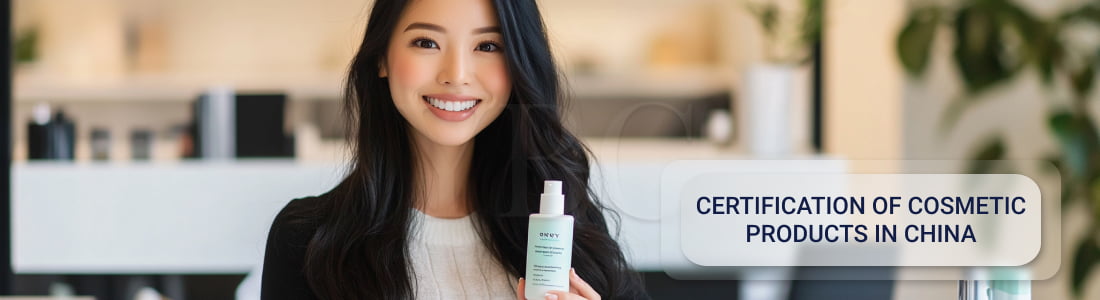


International brands have considerable scope for growth within China's expanding beauty sector. Access to that opportunity nevertheless involves demanding regulatory work: special cosmetics need registration, whereas general cosmetics undergo filing. This guide examines the principal requirements and practical stages involved in cosmetics registration in China.
Why cosmetics compliance in China matters
Growing international trade has made China particularly attractive to beauty businesses. A successful launch nevertheless depends on observing local rules, including the formalities required before sales begin. Standard commercial channels remain unavailable until the product has completed the procedure applicable to it.
Completing the procedure helps safeguard consumers and maintain product quality. By establishing cosmetics compliance in China, brands can enter the market, earn buyers' trust and pursue further commercial opportunities while building a stable business.
Oversight, standards and safety
China's cosmetics regime ranks among the strictest internationally. Every ingredient and the processes used in manufacture undergo close scrutiny. The National Medical Products Administration (NMPA) provides national oversight, while other competent authorities discharge their respective responsibilities.
The controls help protect consumers by checking whether products satisfy prescribed standards for quality and safety, although a compliant product may still cause an adverse reaction.
What buyers expect from a brand
Chinese consumers increasingly want documentary confirmation of quality before buying. A company completing the procedure demonstrates both openness about its products and confidence in them.
That assurance reinforces loyalty. Once reassured about quality, even highly demanding consumers will reconsider their reservations and make a trial purchase.
The commercial importance of market access
Overseas businesses must fulfil the relevant formalities before using standard import and domestic sales channels. Without the required registration or completed filing, a business cannot import or sell the product through those channels.
Evidence of cosmetics compliance in China also distinguishes a company in a crowded market. Manufacturers benefit, as do traders purchasing cosmetics for resale.
Environmental and social obligations
As greener technologies spread worldwide, cosmetics businesses need to consider environmental effects during manufacture and after use. Production should minimise harm, while the empty packaging should allow disposal without damaging the environment.
China also expects businesses to act responsibly towards society. By observing the relevant social standards, management demonstrates that it takes those responsibilities seriously. Businesses must fulfil environmental and employment duties alongside the applicable product procedure.
The legislation behind the procedures
Issued in 2020, the Cosmetics Supervision and Administration Regulation (CSAR) became effective on 1 January 2021. This principal legislation governs commercial operations in the sector and establishes requirements for safe, good-quality cosmetics.
- Provisions for Registration and Filing of Cosmetics — the procedural rules businesses must follow.
- Safety and Technical Standards for Cosmetics — technical provisions concerning hygiene and product safety, read together with applicable national standards.
Establishing the product category
Intended function determines which category a product belongs to. Registration covers the special category, including products for colouring or perming hair, preventing hair loss, protecting against sunlight, and removing spots or whitening skin. A claim concerning a new cosmetic function also requires special classification. Acne care and anti-ageing, however, do not establish that status by themselves; claims concerning pigmentation need particularly careful examination.
Where no special function applies, a cream, make-up product, shampoo or shower gel can belong to the general category. These products serve everyday needs for skin and hair care, hygiene or an improved appearance. Cosmetics filing in China is the applicable procedure for these products. Compared with registration, it is usually quicker and simpler, and testing requirements may be less demanding.
Planning cosmetics registration in China
Strict requirements govern each stage of preparation. Care is needed throughout, from compiling the dossier to arranging tests and making the submission, with the category determining the procedure to follow.
Assemble the supporting material
Preparation begins by gathering evidence that the product is safe and conforms to Chinese standards. The formulation details must be accurate and current, with laboratory investigations and analytical findings to support the dossier.
The formula must identify every ingredient used during manufacture and give its percentage. Comparing those details with China's permitted, restricted and prohibited ingredient provisions allows potential problems to be identified before submission.
Laboratory documentation must address the relevant microbiological investigations, heavy-metal analyses and toxicological tests. Product characteristics and possible exemptions determine the toxicology programme, so cosmetics do not all undergo identical tests.
The applicable dossier rules determine which formulation records, safety data sheets and certificates of analysis must be supplied. Chinese-language documentation is required, with specified exceptions for certain names and recognised technical terms. Notarisation applies to designated documents, including relevant authorisations; it is not automatically required for every dossier page.
Appoint the domestic representative
A Chinese enterprise with legal-person status must represent an overseas applicant as domestic responsible person. This enterprise handles the applicable regulatory procedure and the associated compliance duties.
The representative submits the documentation, maintains contact with regulators and oversees labelling compliance. Selection therefore deserves care: a representative's mistakes can prevent completion of the procedure or even lead to a recall in China.
Prepare for a manufacturing audit
When a manufacturing audit is required, the factory's records are examined first. Inspectors review permits, licences and certificates, including documentation demonstrating good manufacturing practice (GMP). Preparation must extend to the premises themselves. Inspectors assess cleanliness, orderly operations and whether modern technology and equipment are used.
Storage comes next. Temperature, humidity and protection from outside influences are assessed for both finished stock and raw materials.
Attention then turns to production. Incoming materials are assessed against their declared specifications. Inspectors check compliance with the production requirements, including those governing mixing, processing and packaging. They also check disinfection and hygiene arrangements throughout manufacture.
Product sampling supports the subsequent quality checks. Analyses address toxicity, sensitisation and product stability. Samples are also examined for potentially harmful substances, including formaldehyde, parabens and heavy metals, with findings assessed against the relevant bans or limits.
The next concern is quality management: inspectors establish whether a system exists and works in practice. Production reports, record books and quality-control logs form part of this examination. ISO 9001 is one example of a management-system standard; it cannot replace the cosmetics GMP requirements.
Infrastructure and personnel complete the review. Equipment condition is assessed, together with staff qualifications and suitability for their duties.
Arrange the safety tests
Laboratory selection is an essential part of arranging cosmetic testing in China. The laboratory's qualifications must cover the regulatory tests concerned. Its investigations establish conformity with the applicable safety standards, with particular scrutiny of ingredients capable of provoking allergic reactions.
Where a product satisfies the prescribed exemption conditions, animal-test documentation may be omitted. In vitro investigations and computer modelling play an increasing part in safety research.
Investigations using in vitro methods
Researchers can combine several in vitro methods to examine a formulation's quality and assess its safety. This approach is increasingly important as demand grows for effective, ethical testing.
Cell cultures reveal toxic effects and show how ingredients affect tissues, including mucous membranes. An isolated model has limits, however: it cannot reproduce every response of an entire organism. For studies involving skin, Chinese researchers use reconstructed human epidermis (RHE), with EpiSkin and EpiDerm among the available systems. Eye irritation can be investigated using reconstructed human corneal tissue.
Gene activity offers another way to investigate an ingredient. Chinese laboratories use real-time polymerase chain reaction (PCR), among other techniques, to analyse changes in expression and identify potential toxins or allergens.
Researchers can build predictive models using artificial intelligence (AI) to assess unfamiliar compounds for safety. With these models, they can conduct cosmetic testing in China more efficiently and avoid extensive experimentation.
Simulation and tissue-based research
Work that traditionally required animals or human dermal tissue is increasingly being undertaken through computer modelling. As buyers seek safe, ethically developed cosmetics, Chinese companies are adopting advanced technologies that accelerate development and help meet environmental standards.
In silico algorithms predict how skin will react to an ingredient, including the likelihood of irritation or an allergic response. Researchers also draw on chemical databases and records of interactions between compounds and skin cells when evaluating safety. AI can analyse large datasets from clinical research and laboratory investigations, substantially strengthening the evidence supporting a product dossier.
To examine in detail how active ingredients penetrate skin, researchers use three-dimensional virtual representations of the human epidermis. Other techniques produce physical models. Bioprinting creates living dermal equivalents suitable for experiments that cause no harm to animals.
In a microfluidic chip, living skin cells allow researchers to observe the absorption, distribution and metabolism of active compounds. This approach substantially shortens testing and improves predictions of effects in a living organism.
A virtual laboratory lets a researcher alter the formulation or surrounding conditions within a simulation, examining how those changes affect quality and whether the cosmetic is safe. Cloud technology also enables research centres and companies to collaborate on shared projects. Leading specialists throughout China can therefore work together on data supporting product submissions.
Submit the dossier and complete the procedure
After the required tests have been completed and the dossier assembled, an NMPA platform account must be opened. The overseas applicant's domestic responsible person then fills in the requested details and attaches the safety documents. Special-category submissions seek registration; general-category submissions proceed through filing.
Registration review can last as long as 12 months, with duration varying by product category. An applicant must provide additional details whenever the authorities request them after identifying errors. False information may result in refusal and further regulatory action.
Approval of a special cosmetic is recorded in its registration certificate. General products require the necessary material to be filed, without an approval stage. Once either procedure is complete, the product has met this prerequisite for lawful market entry.
Contact our specialists
Allowing for the cost of each product
A range containing a cream, lotion and scrub involves separate product submissions. Each therefore needs its own allowance in the budget; the range cannot be treated as one item.
A five-year term applies to a special cosmetic's registration certificate. General-cosmetic filing has no corresponding certificate with that term. The certificate costs ¥72,657 (US$490). Auditing is charged separately at ¥9,638 (US$65) per hour. NMPA itself levies no administrative fee on an initial special-cosmetic registration; laboratory work and professional assistance still entail costs.
Businesses planning expenditure on cosmetics compliance in China should first review their formulations and establish how many products require submission. Those preliminary assessments help determine the budget for the applicable procedure.
Checking ingredients against prohibitions and restrictions
An ingredient review must distinguish prohibitions from conditional use. Chinese cosmetic regulations prohibit numerous ingredients, including formaldehyde, certain hormones and certain pesticides. Other substances face restrictions on use. When assessing a formulation, businesses must distinguish these requirements and account for regulatory updates.
Consumer health is a central concern. After highly publicised quality scandals, authorities began examining cosmetic ingredients more closely for possible health effects. Environmental protection provides another reason for the controls: China seeks to improve environmental conditions and reduce harm associated with cosmetics.
China seeks alignment with international safety standards and updates its prohibited-ingredient lists accordingly. A formula cannot qualify for market entry if it contains a banned ingredient or uses a restricted one beyond the permitted conditions.
Serious breaches expose businesses to substantial fines, product confiscation and licence revocation. Consumers consequently have greater confidence in cosmetics that pass the required checks, whether manufactured locally or imported.
Examples to examine during a formulation review
Ingredient assessments must identify the rules and hazards specific to each substance:
|
Ingredient or group |
Regulatory distinction |
Risks and context |
|
Benzene; toluene |
Cosmetics cannot contain benzene as an ingredient. Toluene needs separate assessment rather than an assumption of identical status. |
These aromatic solvents raise substance-specific questions about irritation, allergic reactions and cancer. |
|
Phthalates |
Prohibitions cover certain compounds; each phthalate needs an individual check. |
Hazardous properties include disruption of hormone function. Examples of applications include perfumes and lotions. |
|
Plastic microbeads |
For the daily chemical products covered, manufacture was prohibited from year-end 2020; sales were prohibited from year-end 2022. |
Damage to aquatic ecosystems prompted the controls. |
|
Methyl mercaptan |
Prohibited. |
The prohibition reflects high toxicity alongside environmental risks. |
|
Oxybenzone; octinoxate |
National rules permit these ultraviolet filters subject to conditions; certain Chinese regions impose restrictions. |
Both filters are widely used. The regional restrictions concern damage to coral reefs. |
The examples above are illustrative. Manufacturers and suppliers should consult the full ingredient provisions before judging whether a product can comply. Manufacturers must adjust formulations as needed to meet evolving Chinese cosmetic regulations, which protect health and consumer rights. By following scientific advances, manufacturers can develop innovative technologies and products with a smaller environmental impact.
What the different documents establish
Importers and manufacturers need to distinguish regulatory authorisation from voluntary certification, since these documents serve different purposes. Businesses considering cosmetics registration in China should identify the necessary documents early and understand their respective roles in arranging market access. Evidence that a product meets quality requirements and is safe also reassures buyers.
Evidence concerning national standards
National standards matter when cosmetics are manufactured or sold in China. Relevant categories include skincare, make-up and perfume, alongside products for personal care. Documentation submitted through the appropriate product procedure demonstrates conformity with the prescribed quality criteria and safety requirements. Meeting the standards reduces exposure to complaints and penalties; simply holding a document does not confer immunity. When planning to manufacture or import cosmetics, arrange the documentation your particular product requires.
Preparing that evidence is an investment in customer satisfaction and the business's long-term prospects. With reliable quality records, businesses can compete fairly and increase sales by earning buyers' trust. International expansion may also be easier where another country recognises that evidence, but its own acceptance rules determine whether this benefit is available.
Safety evidence for imports
For an overseas manufacturer exporting cosmetics to China, the necessary safety evidence accompanies whichever procedure applies. Special products need registration, while general products undergo filing.
NMPA administers the national system. A product cannot lawfully be sold through standard domestic channels before completing the procedure its category requires.
Preparation requires a complete formulation record identifying every ingredient and its origin. The necessary safety assessment follows, together with the required tests. Manufacturers can reduce risks and launch their brands in China sooner by keeping the process transparent and observing all applicable standards and rules.
Environmental credentials
Growing interest in responsible production has prompted China to develop environmental certification schemes and standards across industries.
Green Product Certification has a defined product scope and its own assessment criteria. It neither constitutes universal approval for cosmetics nor automatically establishes the natural origin, biodegradability and harmlessness of every ingredient. A business must establish whether the relevant scheme covers its product and what claims certification supports. These scheme-specific requirements are separate from those governing registration or cosmetics filing in China.
Environmental considerations for cosmetics include using natural ingredients, biodegradability and the formulation's environmental impact. Production practices should limit emissions, reduce water and energy consumption, and manage waste effectively. Packaging that is readily recyclable or naturally degradable is another consideration. Companies also have social responsibilities concerning ethical practices and labour standards.
Once the applicable scheme's criteria are satisfied, the certification body issues its certificate. Where defects prevent certification, it identifies the matters requiring correction. Such credentials help Chinese manufacturers, including beauty businesses, earn consumer trust and strengthen their position internationally.
Cosmetic labelling in China: information and packaging
Electronic labels can help buyers identify authentic products and obtain information about them. China's electronic-labelling pilot involves selected businesses and was expanded from 1 February 2026. A QR code under this programme gives access to Chinese-language label details.
Completing the product procedure does not settle labelling compliance. Lawful market entry also depends on the label fulfilling the applicable rules. Cosmetic labelling in China therefore deserves the same attention as the product procedure.
The packaging must identify the product by its Chinese name and state its ingredients, net content and directions. Product functions must be described accurately. The applicable registration, manufacturing-licence and product-standard numbers are also required.
The label must identify the manufacturer and the business registering or filing the cosmetic, giving a name and address for each. An overseas registrant or filer must also identify its domestic responsible person. Contact information must satisfy the relevant rules.
Expiry details must follow a permitted format. One option pairs the manufacturing date with shelf life; another pairs the batch number with an expiry date. A period of use after opening cannot replace these details. The remaining information must cover storage, contraindications and the necessary warnings, including those concerning allergies, as the rules require.
Selecting and designing the packaging
Packaging rules continue to become stricter and more detailed. Appropriate design supports legal compliance and commercial competitiveness; deficiencies can jeopardise the effort already invested in bringing a product to market.
Recycled plastic, biodegradable materials and paper certified by the Forest Stewardship Council (FSC) are environmentally preferable options. China's drive to reduce waste also favours using less packaging while retaining its function.
Materials need to shield the contents from moisture, light and physical damage. Ease of use matters too: design should accommodate the intended customer's age and physical abilities.
Businesses should consider packaging design when planning how to promote their products. Chinese manufacturers use distinctive, innovative designs to attract attention and make their brands recognisable.
Difficulties overseas businesses need to anticipate
Meeting standards abroad does not settle every requirement in China. Its national standards, known as GB, differ from those of other jurisdictions: examples for comparison include the EU Cosmetics Regulation and US requirements administered by the Food and Drug Administration (FDA). Manufacturers must undertake any additional research and testing needed to satisfy China's rules on safe ingredients and packaging stability.
New ingredients bring a further task: their category determines whether they need registration or must undergo filing. Requirements concerning new ingredients do not oblige businesses to seek fresh approval for every existing ingredient. Research on a new substance, together with the necessary testing, calls for extra time and resources.
Overseas applicants need local representation to handle dealings with Chinese regulators. Working through the required domestic responsible person complicates communication and increases expenditure on cosmetics compliance in China.
Documentation presents its own demands. Quality certificates, safety analyses and product samples form part of a substantial dossier. The relevant rules require Chinese translations and, for specifically designated documents, notarisation.
Regular regulatory audits may include visits without advance notice to production sites and warehouses. Businesses need transparent operations and continuing readiness for inspection.
Qualification requirements restrict laboratory selection and increase expenditure. Selection must take account of the particular tests a laboratory is qualified to undertake.
Language and cultural differences can produce misunderstandings of legislation or documentation. Careful interpretation is therefore necessary. Consumer preferences also matter locally, potentially requiring attention to both formula and packaging.
Scheduling must accommodate the months that can separate submission from registration, including possible delays. Meanwhile, regulatory updates require monitoring and may call for changes to manufacturing processes.
The financial commitment is substantial. Businesses must budget significant sums for testing, product submissions, local representation and legal assistance.
Conclusion
Rapid development has placed China's beauty sector among the largest worldwide. Foreign manufacturers seeking access must nevertheless meet demanding local rules. NMPA leads oversight alongside other competent authorities. The required safety work addresses toxicity, sensitisation and related concerns, with reports from suitably qualified laboratories providing the relevant evidence.
Many overseas companies choose local manufacturing to simplify their regulatory arrangements. This approach reduces logistics expenditure and can shorten certain stages, while product-specific requirements continue to apply.
Contact our specialists to discuss cosmetics registration in China. We will draw on our knowledge of the legislation to help you obtain the necessary regulatory documents. Extensive experience and ongoing engagement with Chinese regulators are strengths of our service.