

























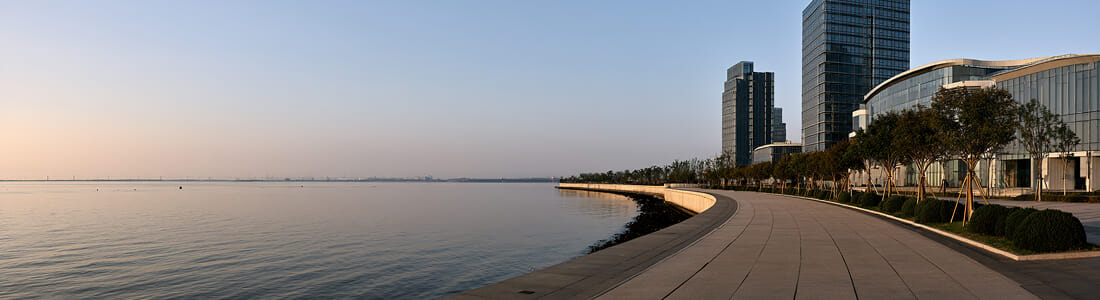


Unlike the classic Shanghai FTZ, business registration in Shanghai’s Lingang zone is supported by bundled tax incentives, including a reduced CIT rate for digital projects and a zero import tariff on equipment. IT teams and fintech startups also benefit from simplified access to pilot regulatory sandboxes.
If you are considering how a foreigner can register a company in Lingang, it is important to note that the local administration has introduced a “one-stop” mechanism with fully digital document submission. In this article, I will break down the process step by step:
- key sectors and performance indicators of the zone;
- available corporate structures and minimum financial requirements;
- the step-by-step registration procedure;
- licensing rules and tax incentives;
- banking support and currency control.
Business Climate in the Lingang Free Zone: Key Industries and Regional Economic Dynamics
Starting a business in the Lingang SEZ is especially attractive for companies focused on high-tech supply chains. By the end of last year, the value of shipped industrial output exceeded ¥260 billion, while exports grew by 28%, mainly due to the aerospace and automotive sectors. Foreign corporations value direct access to the Yangshan deep-water hub and the high-speed metro line connecting Lingang with Pudong Airport in 35 minutes.
Free zone status makes it easier to register an enterprise in the Lingang Free Economic Zone: priority industries such as chips, biomedicine, and green energy receive a 15% CIT rate and R&D subsidies covering up to 30% of costs.
Investors planning to open a company in Lingang also point to simplified equipment imports. Customs duties and import VAT on production lines are reduced to zero if the equipment is used within the park for at least five years. This regime lowers CAPEX and speeds up business launch in the Lingang Free Zone (Shanghai) by six to eight months.
To set up a company in Lingang in the autonomous transport sector, it is enough to provide a test report and an insurance agreement. Road testing is permitted within designated FTZ corridors. This flexibility attracts major automotive groups and supports related industries, which is why more entrepreneurs are seeking to establish a firm in the Lingang zone for the development of LiDAR and V2X systems.
According to statistics from the Free Zone Committee, company registration in Lingang takes an average of five business days. The electronic platform automatically assigns a unified social credit code, allowing investors to launch a business in Lingang immediately, without additional visits to the tax office.
The startup ecosystem is growing as well. Over the past year, more than 1,800 youth-led projects have been registered, so startup registration in Lingang may be accompanied by a grant of up to ¥1 million for prototype development and a preferential rental rate in the Dishui Lake AI Town incubator.
Organizational and Legal Forms of Companies in the Lingang SEZ (Shanghai): Analysis and Practical Guidance
When planning to create a business structure within the Lingang free territory, it is important to choose the right legal format from the outset. The corporate form should reflect the company’s commercial goals, whether these involve foreign trade operations, the sale of goods, research and development, or participation in state-level tenders. The selected legal model directly affects not only the range of permitted business activities, but also the minimum capitalization requirements and the structure of corporate management.
The most popular option among foreign founders is a wholly foreign-owned enterprise, or WFOE. This is an independent legal entity whose registered capital is held entirely by foreign investors and which is established and operated without local partners. This format is convenient for investors who do not wish to involve a Chinese partner and intend to control business processes directly.
If a project is linked to state subsidies or the domestic market, it may be more advantageous to open a firm in the Lingang zone as a joint venture, or JV. This structure can provide access to domestic tenders, reduce rental costs in technology parks, and speed up the approval of permits.
The table below is intended to simplify the process of setting up a company in Lingang (Shanghai), taking into account key legal and operational parameters:
|
Organizational and legal form |
Non-resident participation |
Registered capital |
Resident director |
Main restrictions |
|
WFOE |
— |
— |
not required |
Only permitted types of activity |
|
JV |
50–99% |
from ¥500,000 ≈ $70,000 |
may be required |
Depends on the charter and shareholders’ agreement |
|
RO (representative office) |
0% (no legal entity) |
none |
mandatory |
Not allowed to conduct commercial activity |
|
Local LLC (with a Chinese partner) |
at least 1 Chinese founder |
from ¥30,000 ≈ $4,200 |
not required |
Domestic market only, without separate FTZ subsidies |
For small early-stage projects, company registration in Lingang is possible through the so-called pre-incubation regime. Under this model, a business receives temporary status for three months without contributing the full registered capital. This is a practical option for founders who are still testing their business model.
Company formation in the Lingang special zone (Shanghai) becomes especially attractive when the project falls within priority sectors such as artificial intelligence, new materials, fintech, or autonomous transport. In such cases, investors may qualify for subsidies, tax depreciation benefits, and assistance in attracting a Chinese investor through local funds.
Those planning to establish a presence in Shanghai’s Lingang district in the form of a representative office, or RO, should keep in mind that this format does not have the legal capacity of a separate legal entity. A representative office mainly serves as a communication platform for promotional activity and business networking rather than as an independent commercial operator. Even so, in certain situations, registration in the Lingang zone as an RO may make strategic sense, particularly when a company wants to study the market environment before making a full-scale entry into China.
If you are a foreign investor and want to open a firm in Lingang, it is better to consult a local adviser on legal forms in advance. Mistakes made when choosing the type of legal entity registration may later restrict access to incentives or make profit repatriation more difficult.
Business Setup in Lingang (Shanghai): Algorithm of Actions for the Business Initiator
Registering a legal entity in the Lingang trade zone follows a clear administrative route, but the process leaves little room for careless paperwork. The chosen legal form does not change the basic logic of registration: the applicant still has to prepare corporate documents, submit them to the competent authority, and obtain confirmation of incorporation. A founder may handle the procedure personally or act through an authorized legal representative. The sequence below shows how a non-resident can establish an enterprise in the Lingang zone of Shanghai.
Choosing the organizational and legal status
The first decision concerns the corporate structure. It must match the future activity, the size of the project, the ownership model, and the intended business operations. A foreign investor may choose a wholly foreign-owned enterprise (WFOE), a joint venture with a Chinese partner (JV), a representative office, or another legal model permitted under the current SEZ regime. This choice affects ownership rights, liability, eligibility for incentives, and the mechanics of dividend distribution. A company cannot be opened in the Lingang SEZ without selecting its organizational and legal form, as this form sets the boundaries of what the business may legally do.
Selecting and reserving the company name
After the legal form has been chosen, the founder must reserve a unique name through the AMR system, which is administered by the Administration for Market Regulation. The name should include a regional reference, such as “Lingang” or “Shanghai,” indicate the business area, and comply with Chinese corporate naming rules. At this point, the formal procedure for registering a company in the Lingang zone begins. Before filing, the applicant should also check whether the proposed name conflicts with existing intellectual property rights or repeats a trademark already registered within the free zone.
Preparing the incorporation documents
To register a legal entity in the Lingang Free Trade Zone, the applicant prepares the Articles of Association, a founders’ agreement where there is more than one participant, and documents confirming the legal address. Each document must be properly certified. If foreign participation is involved, the file also needs a Chinese translation. The registration package must also disclose information about the ultimate beneficial owners of the business.
Filing the application with the registration authority
The application and supporting documents are filed with the local office of the Administration for Market Regulation (AMR). In certain cases, the process may be completed remotely through the FTZ one-stop platform. Generally, the standard package covers the incorporation document, copies of passports or corporate charters of the founders, legal address confirmation, lease contract for premises, a notarized power of attorney when a representative acts on the applicant’s behalf, and proof of payment for the state fee.
Receiving the registration certificate
The final step in creating a company in the Lingang zone is the issuance of the registration certificate. This certificate confirms that the legal entity has been established. Once it is issued, the company may open a settlement account, sign civil-law contracts, and apply for the licenses required for its specific business activity. When the documents are prepared correctly, registering a legal entity in Lingang usually takes 10 to 20 business days.
Where a non-resident registers a company in Lingang, additional identity checks may apply. Foreign documents may also need to be validated through the Chinese consulate in the applicant’s country of origin. This point becomes especially important when several foreign founders from different jurisdictions take part in the same project.
A company can be registered in the Lingang Free Economic Zone without unnecessary delays if each procedural step is handled correctly. Proper preparation allows the business to start operations on time and meet local compliance requirements from the first months of work.
Regulated Types of Business in Lingang (Shanghai): Procedure for Obtaining a License
In a number of sectors, including digital finance, healthcare, and high-tech manufacturing, registering an enterprise in the Lingang Free Economic Zone in Shanghai is not enough on its own. The company must first acquire legal entity status, and then obtain the permit required for its specific activity. For controlled business areas, a license is not an optional formality; it is the document that allows the company to operate lawfully.
- development of digital platforms for financial technology;
- medical clinics, laboratories, and biotechnology companies;
- manufacturing of dual-use equipment, including drones and aviation components;
- educational institutions, including international schools and supplementary education centers;
- logistics businesses using international infrastructure and temporary storage warehouses;
- telecommunications and IT services, especially where personal data processing or encryption is involved.
A legal entity may be established in the Lingang Special Economic Zone, but work in a regulated sector can begin only after the relevant business permit for that territory has been issued. The general sequence is outlined below.
Procedure for Obtaining Permit Documents in the Lingang FTZ:
Table: Agencies and Licensing Authorities by Key Sector
|
Sector |
Licensing authority |
Review period |
State fee, approx. |
|
Fintech, payment solutions |
Shanghai Financial Regulatory Bureau |
20–30 business days |
from CNY 1,000 ≈ USD 140 |
|
Educational services |
Shanghai Municipal Education Commission |
30 business days |
from CNY 800 ≈ USD 110 |
|
Biotechnology and pharmaceuticals |
Shanghai Health Commission |
25–40 business days |
from CNY 1,500 ≈ USD 210 |
|
Dual-use manufacturing |
Ministry of Industry and Information Technology (MIIT) |
up to 45 days |
from CNY 2,000 ≈ USD 280 |
|
Telecommunications and encryption |
Cyberspace Administration of China |
30 business days |
from CNY 1,200 ≈ USD 170 |
Setting up a business in the Lingang SEZ without first obtaining the required license for a regulated activity may result in fines and cancellation of the registration. For this reason, the licensing issue should be checked before the incorporation documents are filed, not after the legal entity has already been created.
Some investors choose to register a commercial organization in Lingang precisely because the zone offers clearer and more digitalized permit procedures. That said, a simpler filing process does not lower the standard applied to the documents. Even one mismatch in the application file may be enough for the authority to refuse approval.
A well-prepared application and a precise understanding of the regulator’s requirements make it possible to register a business in the Lingang Free Trade Zone with lower costs and without delaying the project launch.
Contact our specialists
Taxation of Enterprises in Lingang (Shanghai): Structure and Incentives
From a fiscal viewpoint, the Lingang area in Shanghai offers an attractive opportunity to launch a company, thanks to its adaptable tax policies. The Shanghai Lingang Free Trade Zone provides tax incentives intended for technology startups, manufacturing firms, and international logistics hubs. The essential tax rules for this SEZ are detailed below.
CIT/Corporate Income Tax, VAT, and Surcharges — Basic Rates
The tax system for legal entities in Lingang includes corporate income tax (CIT). The standard rate is 25 percent. At the same time, accredited companies operating in priority sectors may apply a reduced rate of 15 percent.
The value-added tax (VAT) rate depends on the type of goods sold or services provided and usually ranges from 6 to 13 percent. For example:
- 13% applies to the sale of industrial products;
- 9% applies to construction services and transport;
- 6% applies to IT and consulting.
Local surcharges also apply, including the urban construction tax at 7%, the education surcharge at 3%, and the local education surcharge at 2%.
Accordingly, establishing a commercial organization in the Lingang trade zone requires advance work on the tax optimization model, with attention to the industry profile and the structure of the company’s costs.
Fiscal Incentives and Local Preferences
Registering an enterprise in the Lingang zone of Shanghai brings the strongest advantages to science and technology companies, as well as R&D centers. Businesses in this category may qualify for:
- a reduced CIT rate of 15% for a period of 5 years;
- accelerated depreciation of fixed assets;
- partial VAT refunds on exports of innovative goods;
- subsidies covering rent payments and social contributions.
Startups included in the FTZ list of encouraged projects may also receive additional support, including interest-free grants and access to a venture capital fund.
Companies registered in Lingang can substantially reduce their tax burden through deductions for research and development expenses. These preferences may reach 175% of the actual costs incurred. For legal entities working in software development or engineering, this creates additional room for reinvestment and scaling.
Price Regulation in Transactions Between Affiliated Persons
Cross-border operations require close attention to transfer pricing rules. Any transaction carried out with an affiliated structure must be properly documented and may be reviewed by the tax authorities.
When a non-resident establishes a legal entity in Lingang, the company also becomes subject to the rules on international exchange of financial information. At the same time, if the investor’s tax residence state has signed a double taxation agreement, or DTA, with the People’s Republic of China, reduced withholding rates may apply to dividends, interest, and royalties. In some cases, the applicable rate may be 5% instead of the standard 10%.
China has concluded such international agreements with more than one hundred jurisdictions, including most European countries, as well as Singapore, Canada, and the UAE. For that reason, the jurisdiction chosen for the holding company should be assessed in advance, with attention to its legal and tax consequences.
These tax mechanisms make establishing a company in Shanghai’s Lingang zone a financially sound option both for early-stage market entrants and for multinational groups that already operate across several jurisdictions.
Opening a Corporate Current Account in Lingang (Shanghai): Rules and Conditions
A company cannot begin normal business operations on the strength of its incorporation document alone. The next required step is opening a bank account in the Lingang free zone. Without it, the company will not be able to make cashless payments, receive the registered capital contribution, sign foreign trade contracts, or settle payments with the tax authorities. The procedure follows a defined order and is fully workable, provided the file is prepared properly. This point is especially important for foreign legal entities.
Before starting the account-opening process, the company should choose a financial institution. Foreign entrepreneurs who have completed company registration in Lingang usually consider banks such as Bank of China, ICBC, Standard Chartered, or HSBC. Each bank applies its own documentary requirements, although the core package is generally similar.
- the certificate confirming entry in the company register;
- incorporation documents and the resolution appointing the company’s manager;
- copies of foreign passports and visa stamps of all participants and management persons;
- confirmation of the company’s legal address in China;
- the tax identification number, if already available.
Under the legal regulations for incorporating a company in Lingang free zone, applicants may either visit the bank physically or submit documents remotely. Remote filings necessitate video verification plus notarized copies of all required documents. The bank retains exclusive decision power at the conclusion.
When filing the application, the company must specify the purpose of the account: operating, capital, or foreign currency. This becomes particularly important where the investor plans to establish a legal entity in Lingang with foreign capital participation.
When opening a corporate bank account for a company in Lingang, the following conditions should be taken into account:
|
Parameter |
Condition |
|
Opening period |
from 7 to 15 business days |
|
Minimum deposit |
from CNY 10,000 to 50,000 ≈ from USD 1,400 to 7,000 |
|
Remote access |
Yes, with two-factor authentication |
|
CNAPS/SWIFT |
Required for cross-border transfers |
Capital transfers require notification through SAFE, the State Administration of Foreign Exchange. If currency control rules are breached, the account may be blocked, so it is advisable to use legally reviewed templates and supporting documents.
Establishing a company in Lingang while arranging its banking infrastructure requires coordination between the registration and financial stages. A properly planned sequence helps avoid delays caused by currency compliance checks or an incomplete banking file.
Specifics of Entrepreneurial Activity in Lingang for Foreign Investors
Lingang was created as a district capable of receiving large-scale international capital, advanced production facilities, and cross-border projects. Still, for a foreign founder, setting up a firm in Lingang is not the same as registering a local Chinese business. The process includes sectoral restrictions, registered capital matters, banking checks, and currency control procedures that must be handled before the company can work normally.
In most cases, a foreign investor will use the WFOE model, meaning a company fully owned by overseas capital. The applicant has to show where the investment comes from, provide the corporate documents of the foreign parent company if such a structure is used, and transfer the registered capital to an account opened in China. Banks and authorities may also ask for additional proof where the ownership chain includes several foreign companies.
Registration of a business in the Shanghai Lingang zone also requires a Chinese contact person or representative. This role may be performed by a local legal entity or by an individual resident acting as an agent, liaison, or authorized contact. In practice, a trusted local representative makes communication with banks, registration bodies, and administrative offices much smoother.
Currency control is another point that foreign founders cannot ignore. The People’s Republic of China keeps close supervision over money moving across its borders. Capital inflows must be reported through SAFE, and the company may be asked to explain the purpose of the transfer, the source of the funds, or the structure of the investment.
- Notarized translations of the articles of association and powers of attorney should be prepared by professional translators.
- Most banks allow remote identification, but the file must be ready in advance. An apostilled passport, proof of address, and corporate resolutions may be required.
- Certain sectors need prior approval from ministries or industry regulators. This applies, for example, to logistics, insurance, and education.
For this reason, launching entrepreneurial activity in Lingang is not only about filing the correct forms. The founder also needs to understand how local administrative practice works, how officials expect documents to be presented, and how Chinese business communication is usually handled. Professional support is often useful here, especially for foreign entrepreneurs entering China through the special economic zone for the first time.
Opening a Company in the Lingang Free Zone: Practical Result
Choosing the Lingang free zone for company formation may be a strong option for businesses that want a long-term position in the Chinese market. The district offers a special legal regime, tax incentives, simplified licensing procedures, and direct access to international logistics. These advantages, however, work best when the investor understands the regulatory setting before filing. Without that preparation, registering a company in the Shanghai Free Zone, Lingang, may take longer and become more difficult than expected.
A careful approach to company formation, legal form selection, incorporation documents, and corporate bank account opening helps prevent avoidable refusals and administrative delays. Where assistance is required, foreign founders may use professional services for business registration in Lingang. Our team supports overseas investors planning to open a company in the Shanghai Free Trade Zone and helps align each stage of the process with local legal requirements.
 Audit and Accounting support
 China: registering a company and opening an account
  How to open a corporate account in China
  Relocating business to China: Registering a company in the PRC
  Establishing a WFOE in China
  China's Banking System: Characteristics and Integration Procedures
  Investment facilitation in China: navigating legal and business landscape
  Regulation of IPOs in China