























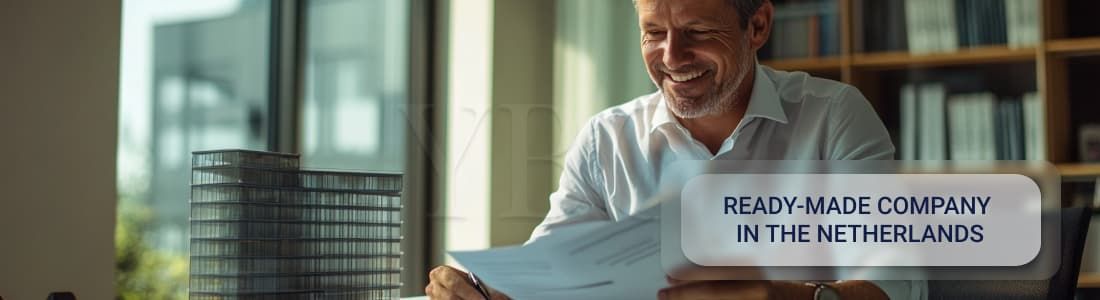



Buying a company in the Netherlands offers entrepreneurs an ideal way to start trading promptly in a highly developed European economy. With incorporation complete before the acquisition, much less time is needed for the legal work associated with formation. Initial administration also becomes much simpler for the buyer.
Entrepreneurs often seek an existing company because they need to start work immediately or require a particular business history. Such an acquisition can be useful for submitting a tender, securing a bank account or signing an urgent contract. The discussion below examines the principal advantages, the legal questions raised by an acquisition and the practical details that deserve attention before a buyer makes a decision.
Why buy a company in the Netherlands?
For businesses seeking an early foothold in a highly competitive European economy, an acquisition offers access to an existing business infrastructure. It can reduce both the time and the organisational work needed to enter the market. Several advantages explain the appeal of buying a business in the Netherlands.
The first is speed. Starting a new company involves preparing its constitutional documents, completing the notarial formalities and arranging a business bank account. Indicative timeframes are two to four weeks for this process, compared with two to three working days for the purchase of an incorporated company. Those estimates should not be treated as guaranteed deadlines: the acquisition and access to banking facilities involve separate checks. Purchasing an incorporated company can avoid lengthy delays and enable a prompt start, which is particularly valuable for projects with an urgent launch date.
You also acquire an entity that has completed registration and may already have a trading history. A sound record and a positive reputation can help with:
- obtaining a business bank account;
- securing credit facilities;
- bidding for public contracts and entering into international transactions.
For some partners and counterparties, a company with a history commands greater trust than a newly established business. That confidence can be crucial when entering an international market and developing commercial relationships there.
Tax conditions provide a second reason to consider an acquisition. Investors benefit from economic stability alongside transparent laws. As a longstanding European business centre, the country gives foreign entrepreneurs favourable conditions for conducting international trade. Within the European Union (EU), its corporate tax system ranks among the most competitive. More than 100 bilateral agreements address double taxation, simplifying cross-border business and enabling efficient management of financial flows. For entrepreneurs establishing or developing an enterprise whose customers and activities extend internationally, these fiscal and economic conditions make the jurisdiction an attractive choice.
Access to Europe is the third benefit. Buying an incorporated entity gives businesses opportunities to serve an EU population exceeding 450 million. That prospect matters especially to exporters and businesses planning to supply services elsewhere within the Union. Logistics reinforces the advantage: Rotterdam has Europe's largest port, while Schiphol airport provides international air connections. Together, these transport facilities give businesses fast, efficient access to markets worldwide, supporting the country's importance as a logistics hub.
A fourth consideration is the legal framework. Both transparency and stability are established features of Dutch law, helping attract investors from abroad. Legal protections apply when an incorporated entity is acquired. Observing the applicable requirements also helps the acquired enterprise maintain its stability over the longer term.
Entrepreneurs planning an early European market entry with reduced risk may therefore find a ready-made company in the Netherlands strategically useful. The acquisition shortens the initial period needed to establish a business. Economic stability, fiscal incentives and a favourable geographical position support the same choice: together, they give international businesses an attractive location from which to conduct their activities.
What an incorporated business includes
Incorporation and entry in the Business Register have already taken place when a buyer acquires a ready-made company in the Netherlands. The register is maintained by the Netherlands Chamber of Commerce, locally called Kamer van Koophandel (KVK). An incorporated entity comes with its formation documents, registration number, registered address and management structure. The buyer therefore receives a business whose legal establishment under Dutch requirements is complete. Commercial work can begin without repeating those formation steps.
The most common form for these acquisitions is a besloten vennootschap (BV): a Dutch private limited company that is especially popular with small and medium-sized enterprises. Beyond incorporation itself, an acquisition may provide an established trading record, a corporate bank account and functioning business processes. Those existing arrangements and the commercial history can greatly simplify dealings with counterparties and financial institutions.
The principal elements are set out below.
|
Element |
What it represents |
|
KVK registration number |
The identifier allocated when the company enters the Business Register. |
|
Registered address |
The legal location from which the firm conducts its affairs in the Netherlands. |
|
Share capital |
The capital subscribed when the company was formed. |
|
Incorporation records |
Notarial records covering, among other matters, the articles of association and ownership details. |
|
Trading record |
Evidence of any previous operations, where applicable, which may strengthen commercial confidence. |
|
Business bank account |
A facility for payments and other banking transactions, subject to the bank authorising access for the new representatives. |
|
VAT registration |
Registration, where required, for value added tax (VAT); other taxes remain outside its scope. |
An acquisition can give an entrepreneur the infrastructure needed to enter international markets with less preparatory work. An existing address, constitutional documents and, where available, banking facilities can save time and resources. The acquisition then provides a basis for adapting to local business conditions and concentrating on growth in a stable, competitive economy.
Operating businesses and shelf companies
Buyers generally choose between two types of company: one with ongoing operations and one held ready for future activity. Both have strengths as well as weaknesses. It is worth examining each option in detail and comparing what it offers with the objectives you have set for your own business.
An operating company has an ongoing business, customers, contracts and established relationships. A buyer can take over its existing operations immediately, making this option particularly useful when a trading record matters to the planned venture. Its customer base, agreements and market reputation can shorten the time needed to get started, because the business already enjoys the trust of its customers and partners.
Actual trading activity can also improve the prospects of attracting investment or obtaining credit. Existing relationships allow you to begin working with counterparties whose reliability the business has already established, reducing the time required to develop new contacts and helping you pursue growth sooner.
Potential drawbacks include existing debts and other financial commitments. In a share acquisition, those liabilities remain with the company you acquire, creating financial exposure for you as its new owner. Performance also depends on the operations already in place. An unprofitable business may be less attractive, particularly if restoring it or changing its strategy would demand substantial time and resources.
A different option is to acquire a shelf company in the Netherlands. Incorporation has taken place, but the entity is not currently conducting active business. Usually, neither trading nor financial results form part of its history. Buyers have different reasons for choosing this type of entity. Examples include securing an incorporated enterprise immediately and saving the time otherwise needed to establish and register a new one.
Without a trading history, however, a shelf entity cannot demonstrate successful past projects or consistently sound financial results. This is a disadvantage wherever experience and reputation carry particular weight in commercial decisions. Investors and potential partners may also find the enterprise less attractive for the same reason: an untested record can leave them uncertain about its reliability and about how far the business can develop in future.
Either route can support a rapid market entry. An operating business brings a history and established relationships; a Dutch shelf company offers a structure for new activity with little preparatory work and, if confirmed by checks, no existing financial commitments. Choose according to your objectives and the work you intend the company to undertake.
Legal forms available to buyers
Several legal forms are available if you intend to buy a company in the Netherlands. Each brings its own features, advantages and requirements, which need to be considered against your objectives and the proposed scale of operations. A comparison of the most popular forms helps identify the one best suited to the business you want to run.
Acquiring a BV
The BV offers considerable flexibility, contributing to its popularity among founders and buyers of existing businesses. A buyer can start trading locally at an early stage through this form, exercising the rights and fulfilling the duties attached to it by Dutch law. The private limited structure also separates corporate obligations from shareholders' personal finances. Ordinarily, shareholders risk only their investment; they do not assume personal responsibility for business debts merely by holding shares.
An incorporated BV allows a buyer to begin operating locally without having to undertake a complex formation process. The structure combines flexible management with a share capital requirement of only €0.01, keeping the initial capital barrier low. These features make it particularly suitable for small and medium-sized businesses. Buyers can adjust their BV's structure to their own needs promptly, without incurring unnecessary costs.
For entrepreneurs focused on business growth, a BV can be a useful choice of ready-made company in the Netherlands. Acquiring one reduces the initial administrative demands, allowing the buyer to concentrate on growing the enterprise. The purchase generally takes little time and gives the buyer all the resources needed to operate the company effectively.
Acquiring an NV
The Dutch public limited company is known as a naamloze vennootschap (NV), another familiar form available for acquisition once incorporation is complete. This structure is commonly chosen by large enterprises and corporations that intend to secure substantial investment or seek a stock market listing. For a buyer pursuing significant commercial opportunities, it offers scope to operate on a larger scale and to make the business more attractive to international investors.
A defining feature of the NV is that its shares may be freely transferable and placed with shareholders. That arrangement is particularly well suited to larger companies wishing to bring in external capital. Further share issues enable additional investors to participate, broadening the company's sources of finance and increasing its appeal to financial institutions and potential business partners. The statutory minimum capital is €45,000, reflecting a more substantial initial financial commitment and a structure intended for larger operations.
Shareholders also benefit from limited liability: their exposure is generally confined to their investment. The structure enables a business to hold substantial assets and undertake major commercial transactions while keeping company obligations separate from shareholders' personal finances. That distinction matters to entrepreneurs seeking to control their financial exposure as their business expands.
Your objectives, the amount you expect to invest and your tax-planning needs all influence the choice of legal form. Each has strengths suited to different business activities. A careful assessment helps identify the structure that best supports both a prompt launch and longer-term success.
Comparing the two structures
The BV and NV are two of the most familiar options within the range of corporate forms available to Dutch businesses. They differ in both legal requirements and financial characteristics, and those differences should inform your decision as a buyer. Comparing their main features helps you make an informed choice about the most suitable form for the enterprise you intend to acquire.
|
Consideration |
NV |
BV |
|
Minimum share capital |
€45,000 |
€0.01 |
|
Shareholder liability |
Generally limited to the investment in shares |
Generally limited to the investment in shares |
|
Transfer of shares |
Shares may be freely transferable |
Shares are privately held; transfer restrictions depend on the articles |
|
Number of shareholders |
One or more |
One or more |
|
Audit of annual accounts |
Required where the applicable size or other statutory criteria are met |
Small companies are generally exempt; larger companies may require an audit |
|
Appeal to investors |
Suited to substantial investment, with scope to raise funds through a stock exchange |
Less attractive to large investors because of the restrictions associated with private share ownership |
|
Management flexibility |
More prescriptive governance requirements |
More adaptable management and decision-making arrangements |
|
Typical uses |
Large businesses planning a listing or seeking substantial capital |
Small and medium-sized enterprises, start-ups and family businesses |
The nature of your business, investment plans and long-term objectives should guide the decision. An NV provides a more complex structure for large corporations pursuing substantial funding and a possible listing. A BV offers the flexibility and low entry requirements that often suit smaller enterprises. Understanding these distinctions helps you select a company that meets your particular commercial needs.
Contact our specialists
Buying a company in the Netherlands: transaction procedure
Acquiring an existing business is a strategic decision that can bring forward your entry into the market and reduce many of the risks involved in starting a new enterprise. The purchase involves several stages, including establishing your objectives, selecting an appropriate company, investigating it and completing the transaction. Each stage needs to be understood and handled correctly if the business is to meet your requirements and expectations. The following sequence explains what the process involves.
From defining objectives through to completion, preparation and careful attention are essential. A well-chosen target and thorough investigation help reduce risks and support successful integration. Working through the stages gives you a sound basis to buy a company in the Netherlands suited to your plans. You can subsequently begin operations promptly and benefit commercially from them. Professional advisers can help handle the transaction efficiently and protect your interests as it proceeds.
Documents to review before an acquisition
Preparing and checking the required paperwork is central to buying a company in the Netherlands. A legally sound acquisition depends on documents that are drafted correctly and meet the applicable requirements. The principal categories of records to examine are described below.
The sale and purchase agreement (SPA) records the agreed price, timetable and other terms. It sets out each party's rights and obligations, the arrangements for assets, and the treatment of the company's debts and loans. All transaction details should be documented and accepted by both parties before the purchase proceeds. The agreement may also specify obligations that continue after completion and deadlines for fulfilling them.
A business establishes its legal existence through its articles of association, registration particulars and other formation records. Taken together, these documents confirm its status, legal form and entry in KVK's register. Before an acquisition proceeds, the constitutional records must be valid and accurate: they provide the evidence that the target enterprise has been lawfully established.
Certain activities require licences or other permissions, including some forms of trading, financial services and medical practice. Before purchasing, check that every necessary authorisation remains valid and determine whether it continues with the business or requires action on the change of ownership. This review must be completed before you acquire the company for the proposed activity.
Employment contracts and collective agreements set the terms on which the business employs its staff. Before purchasing, examine them carefully for legal risks and payment commitments. They may address dismissal and other significant employment conditions. Under a share acquisition, the employer remains the company, with all existing staff obligations continuing under its new ownership. All employment agreements therefore need careful review in advance.
Financial statements and accounting records reveal the enterprise's financial condition. The buyer needs balance sheets, profit and loss accounts and tax returns to establish how it is actually performing. These records underpin due diligence and help assess future prospects alongside the present position. When buying a business in the Netherlands, proceed only if all the financial information is transparent and accurate.
Commercial agreements govern dealings between the enterprise and outside organisations. Suppliers, distributors, tenants and other business counterparties may all have contracts within this category. Examination of those agreements reveals the obligations the enterprise bears in conducting its business and provides a basis for assessing the future of its commercial relationships. Before investing, review the full set of agreements carefully. Otherwise, contractual commitments that were not anticipated may emerge once the acquisition is complete; a thorough review helps avoid that outcome.
Accurate preparation and close scrutiny of the paperwork are essential to a successful transaction. Clear, valid documents provide confidence in its legality and help avoid financial or legal difficulties. Complete the process only once the records have been checked and put in order. Qualified advisers can assist at every stage, helping protect your interests and improve the commercial outcome.
Tax considerations for the acquired company
Clear tax rules and favourable fiscal conditions draw many overseas investors to the country. Those advantages are also available through buying a company in the Netherlands with operations already established, providing another reason to consider an acquisition.
The first €200,000 of taxable profit is subject to 19% corporate income tax. Smaller and medium-sized enterprises seeking to minimise tax expenditure find this rate attractive. Only profit above that amount is taxed at 25.8%. Even at the higher rate, the burden remains competitive compared with that imposed across many other European jurisdictions.
VAT normally stands at 21%. Qualifying categories of goods or services instead attract 9% or 0%, according to the rules governing them. These different rates help create favourable conditions across several industries. Retail, service businesses and international logistics are examples of sectors for which the distinctions have practical importance.
Dividends generally attract withholding at 15%, although exemptions or relief may apply. Distributions to shareholders based domestically or abroad can attract this withholding. For investors looking to earn income from their capital in a Dutch business, this general rate is attractive and forms another part of the fiscal considerations relevant to an acquisition.
Low corporate profit tax rates, deductions and reasonable withholding on dividends make the fiscal environment attractive to acquirers. An existing enterprise gives its buyer access to those conditions. Transparency in tax policy and the range of available reliefs continue to strengthen the country's appeal as a European location for commercial activity.
Sector prospects for buying a business in the Netherlands
Economic stability, developed infrastructure and favourable fiscal policy explain why many entrepreneurs select the country for expansion or entry into additional markets. These qualities underpin its reputation as a particularly attractive European business location and a favourable jurisdiction for investment in an operating enterprise. Entrepreneurs who intend to buy a company in the Netherlands should therefore examine the industries where potential is currently strongest. Several sectors warrant particular attention when considering an acquisition.
Information technology (IT) attracts considerable interest. The country actively develops its technology industry while supporting start-ups and innovative enterprises. By 2023, it ranked among Europe's leading start-up hubs, prompting entrepreneurs to seek local acquisitions as a base for international expansion. Government policy supports IT and the start-up environment, with innovative enterprises receiving tax incentives among other forms of support. Estimates put the Dutch IT services market at €35 billion in 2023. That scale adds to the sector's appeal for investors seeking an incorporated enterprise locally.
Renewable energy also presents promising acquisition opportunities. The country invests in sustainable development, supporting businesses specialising in solar and wind power. The market for renewable energy reached €11.6 billion in 2022 and continues to expand. For entrepreneurs seeking long-term projects with an environmentally sustainable focus, these conditions make purchasing an existing enterprise in this industry particularly attractive.
Healthcare and biotechnology are also significant areas for acquisition. An estimated pharmaceutical market of €15 billion in 2023 underpins the country's importance within Europe for medical products and services. High standards and government-backed innovation can benefit investors who acquire a medical or pharmaceutical business. Biotechnology research and development is another national strength: the country is an important centre for this work. This research role further increases the market's appeal to investors from abroad.
Logistics is similarly developed and promising. A strategically advantageous position within Europe makes the country a hub for transport and distribution, particularly for goods moving across the continent. Its logistics market was valued at roughly €85 billion in 2022; forecasts envisage steady growth in the years ahead. An acquisition offers a way to enter this dynamic industry promptly through an enterprise whose legal formation is already complete.
Acquisition opportunities extend across technology, renewable energy, healthcare and logistics. In these industries, buying a business in the Netherlands gives entrepreneurs an opportunity to benefit from economic stability, a highly skilled workforce and government support. These advantages provide favourable conditions for developing their own enterprise and pursuing successful growth.
Ways to use an acquired company
For an entrepreneur starting work in a chosen industry or extending an existing European presence, a ready-made company in the Netherlands can be a useful acquisition. Trading can begin promptly through a legal structure whose registration is complete. That early start is a principal reason for choosing this route. Beyond ordinary business operations, the entity can help strengthen a commercial reputation and create further international opportunities.
An established enterprise can demonstrate its business history when entering new markets. That record establishes its legitimacy and shows the duration of its operations, making the history a valuable commercial asset. Reputation can also help secure lending. When considering applications, Dutch banks often examine previous business activity, financial performance and evidence of successful operations locally. Acquirers may therefore find that a sound record improves their access to financing. That prospect can be a major advantage of investing in an existing business and can contribute to its stability under new ownership.
Operating companies can also enter partnerships with public bodies or private organisations, including public-private arrangements under which businesses participate in major government projects. These relationships open further commercial opportunities. The company may also undertake joint activities with other firms, accelerating market entry and broadening its options. Less commonly, a foreign company uses the acquired entity as its subsidiary. This enables the wider business to integrate into the EU economy and benefit fully from the tax arrangements and legal advantages available there.
An acquisition can therefore serve purposes beyond starting work in a particular industry. Partnerships, financing and a stronger international presence may all form part of the acquisition strategy.
Conclusion
An acquisition provides a convenient way to establish an early market presence while reducing business risk and the time devoted to initial set-up. Alongside stable, transparent laws, the country offers opportunities in rapidly growing industries, including IT, renewable energy and logistics. Buyers can select an enterprise that satisfies business standards and their own expectations, taking their objectives and preferences into account. A suitable target might be a small firm or a substantial organisation with an extensive commercial history.
We provide comprehensive advice and support throughout the acquisition for entrepreneurs seeking to complete their purchase promptly and with minimal administrative effort. Our specialists can investigate the target and help you buy a company in the Netherlands, addressing the legal details and relevant financial and tax considerations. We are ready to act as a reliable partner in pursuing your business objectives and helping you make a successful start in this particularly attractive European market.
 Registering a company in the Netherlands
 How to register an ICO fund in the Netherlands?
 Establishing a holding company in the Netherlands