

























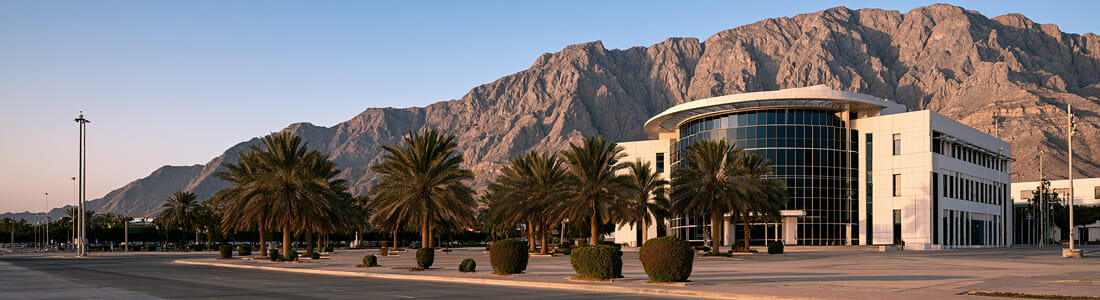



International technology groups and investors who plan Web3, artificial intelligence and blockchain ventures turn to RAK DAO. The zone has borne the name Innovation City since 2025. A legal entity formed here is a resident structure that meets the requirements of a regulated jurisdiction, and no offshore regime applies to it. Business registration in RAK Digital Assets Oasis nevertheless imposes strict federal compliance obligations on applicants, because a free-zone license cannot replace the approvals of the central regulators where custodial or financial services arise.
In this article I set out how the regulatory framework of the renamed jurisdiction is constructed and which legal forms remain open to foreign entrepreneurs. I examine the incorporation procedure and the capital requirements. The discussion also covers the way adequate substance is evidenced for the zero tax rate and the particular features of structures formed as a DAO Association.
Legal status and regulatory model of RAK Innovation City
Ras Al Khaimah brought the zone into being by Law No. 2 of 2023, then relaunched it as Innovation City in September 2025. Filings must therefore carry the current designation of the jurisdiction. The Innovation City Authority carries out registration, supervision and licensing inside the territory. That body maintains the commercial register, approves IT activity codes and collects the prescribed fees. It issues the documents that support residence visas.
Founders planning company formation in the RAK DAO free zone must distinguish the local rules from federal UAE requirements. The local trade license covers technology sectors alone, namely Web3, artificial intelligence and software development. Where a company exchanges assets, holds cryptocurrency in custody or administers digital wallets, the free zone requires clearance from the federal capital market regulator, the Capital Market Authority.
The regulatory framework draws on emirate legislation and on the free-zone Companies Regulations. Rules for decentralised associations apply in addition to them. Federal acts on value added tax and on corporate tax apply as well, together with the legislation against money laundering. Emiri Decree No. 23 of 2023 draws the zone boundary tightly around the Al Jazeera Al Hamra district and the RAK Bank ROC Office building in Al Rifaa. A substance requirement attaches to incorporation in the emirate, and a lease of office or production premises evidences it.
The jurisdiction admits remote incorporation and requires no personal attendance by the founders. Commercial operations beyond the zone boundary, or on the mainland, are prohibited without clearance from the Ministry of Economy. Whether the firm enters the register remains a matter for the registrar, who may refuse an applicant without stating any reason. A company formed in the RAK DAO free zone may transact across borders lawfully, provided the project observes the limits of its trade license strictly.
- local regulator: the Innovation City Authority, with full legal personality;
- federal oversight of crypto assets: the Capital Market Authority;
- official zone locations: Al Jazeera Al Hamra and the RAK Bank ROC Office in Al Rifaa;
- core requirements: confirmation of substance, transparency of beneficial owners and record-keeping to AML standards.
Corporate structures, shareholders and capital requirements
Which legal form suits a project here depends on the pattern of income distribution and on the investment model of the venture. The RAK DAO free zone admits both classic share-based enterprises and innovative decentralised structures. For the IT sector the most sought-after vehicle remains the company limited by shares, which accommodates between one and fifty shareholders and requires at least one director, a natural person. No secretary is required, though every entity must appoint a manager.
Research or social initiatives may use the company limited by guarantee, a structure with no classic shares. Founders who choose that guarantee form in RAK DAO obtain no exemption from tax reporting. Where an existing foreign holding is to be extended without a new legal entity, the registrar permits a branch, which operates under the full financial responsibility of the parent group.
The legal wrapper of a decentralised association answers the specific needs of the Web3 industry. A DAO Association may be registered in the emirate only under a series of strict conditions, which include a prohibition on dividend payments to token holders and a requirement that all of the project's software code remain open and publicly accessible. Each association must also appoint at all times a Manager or a Registered Agent, and a Manager must be a UAE resident above the age of eighteen.
Comparative parameters of corporate structures
|
Structure parameter |
Company limited by shares |
DAO Association |
Branch |
|
Composition |
1 to 50 shareholders |
From 2 founders |
1 parent firm |
|
Dividend payment |
Permitted |
Prohibited by regulation |
Carried to the parent group's balance sheet |
|
Residency of managers |
No restrictions |
Mandatory for the Manager |
Local representative |
|
Share capital |
Determined by risk |
None |
None |
Free-zone regulations do not publicly fix a single minimum capital, and the administration assesses the risk of each declared activity code individually. Shares may be denominated in UAE dirhams or US dollars, and euros and pounds are equally admissible. Legislation admits crypto assets as a contribution in kind, though the procedure requires an independent valuation of the digital units.
Before an IT firm opens, its promoters must match the parameters of the chosen legal form against real operating processes. Registration by a non-resident entails enhanced due diligence on the beneficial ownership structure, so the administration stops nominee arrangements without disclosure of controlling persons at the pre-compliance stage. Applicants must record the role of every shareholder in the constitutive documents in detail. Later changes in senior management must be recorded with the Innovation City Authority on payment of the prescribed fees.
Incorporation in RAK Digital Assets Oasis: stages and documentation
Incorporation here follows a strictly sequential course and requires the applicant to justify the commercial logic of the project clearly. Completing the standard forms does not by itself secure a favourable outcome. The local registrar assesses the risk of each start-up and examines the channels of capital formation and the structure of asset management with particular care. Incorporation runs through four principal stages, and each of them demands legally sound documents.
Preliminary planning and choice of parameters
At this stage the investor determines the exact lines of activity and selects a suitable legal form. The commercial name is reserved at the same point. That name must carry the suffix that indicates the legal status of the firm and must not infringe rights in registered trade marks. Matching the planned operations against the regulatory perimeter is critical here, because it establishes whether digital instruments will require further clearances from federal financial authorities.
Assembly of the compliance package
The KYC procedure for individual founders calls for a passport copy, and that document must still be valid for six months at least. Proof of residence must accompany it, whether a utility bill or a bank statement, in a translation that a notary certifies. Corporate shareholders must submit the whole legalised file of the parent company. That file includes the charter, a current extract from the commercial register and a board resolution on the establishment of a subsidiary abroad. Every foreign document must undergo consular legalisation or be apostilled. Incorporation in the emirate cannot proceed without the CVs of the principal managers, which evidence their specialist experience in the IT industry.
KYC and the compliance inspection
Once the primary data reach the administration of the zone, it initiates enhanced due diligence (EDD) on all connected persons and ultimate beneficial owners. Where planned investment exceeds USD 250,000, the Authority requests source-of-funds documentation. The applicant must also file a full business plan that covers project tokenomics, cybersecurity design and AML policies. Founders must answer the registrar's targeted queries promptly on the nature of future transactions and the geography of the client base.
Finalisation and issue of the trade license
After the beneficial owners obtain approval, the parties sign the Memorandum of Association. The document is drawn up in English on the Authority's approved form and records the capital, the rights attaching to shares and the rules of management. Signature may take an electronic form recognised by the registrar or proceed through the state identification system. Once that step concludes, the Authority records the entry and assigns a unique number. The certificate of incorporation follows, alongside the trade license.
Foreign holdings that plan expansion take a separate route, branch registration in Innovation City, which calls for a power of attorney in favour of an official representative in the UAE. That representative gains authority to deal with government bodies and to sign local documents. The whole process attaches to a lease of physical or virtual workspace, and the contract fixes its parameters. Those parameters govern the visa quotas available.
Many entrepreneurs approach the former RAK DAO in the expectation of a rapid launch. In practice, the collection and international legalisation of corporate documents consumes more time than the officials need for their review. Defects in powers of attorney or a missing apostille on directors' resolutions cause the documentation to be returned for correction.
Once every registration formality in the former RAK DAO concludes, the entrepreneur receives the official license and the credentials for the internal portal. Through that portal the firm conducts its later administration, renews its licenses and files requests for residence visas. Investors are advised to assemble a complete working set of documents before they pay the registration fees, which reduces exposure to refusal.
- copies of the foreign passports of shareholders, directors and beneficial owners;
- documentary proof of the residential address of each individual, dated within the last three months;
- professional CVs of the shareholders, with an account of their experience in advanced technology;
- legalised constitutive documents for corporate shareholders;
- a detailed description of the commercial model, with a technical document (white paper) where a token exists;
- documented source of funds where investment volumes are large.
Where this set is prepared carefully, the matter moves quickly to the tax registration stage and to the first contacts with banking institutions. No change to the document set is permitted once review has begun, which demands maximum accuracy from applicants in the initial forms.
An attempt to hide beneficial owners based in certain jurisdictions, or the supply of false addresses, brings immediate rejection. The local registrar works closely with the federal supervisory authorities of the UAE, which excludes any use of nominee structures without real economic substance. Transparency remains the principal condition for obtaining lawful status here.
Holders of a license must also keep their compliance data current from year to year. The trade license issues for a limited term and requires regular renewal, a procedure that verifies the currency of shareholder passports and of the addresses on record. Suspension of the license deprives the firm of the right to conduct lawful operations and may lead to the forced closure of bank accounts.
Contact our specialists
RAK DAO license: scope and limits
Lawful commercial activity here requires strict observance of the boundaries of the license issued. Founders of high-technology projects may obtain permissions for software development and for artificial intelligence. Blockchain nodes, GameFi platforms and IT consulting take the same route. The regulator assesses the real functionality of the product rather than its marketing description. Anyone applying for a RAK DAO crypto license must compare the architecture of the platform against federal UAE requirements. The free-zone trade license permits a company to write software code, yet it prohibits custodial storage of assets or currency exchange.
Operations connected with fiat gateways, the administration of third-party wallets or the launch of staking are supervised by the Capital Market Authority. In such cases the standard free-zone license will not suffice without a nationwide status as a virtual asset service provider. Investors behind certain decentralised initiatives may set up a DAO in Innovation City under the regime for such associations, which prohibits any distribution of profit and requires the use of open code.
Permitted RAK DAO activities and licensing categories
|
Activity category code |
Permitted operating processes |
Additional financial restrictions |
|
Blockchain Infrastructure |
Development of communication protocols, encryption |
Ban on managing third-party wallets |
|
AI Solutions & Software |
Machine learning, commercial software development |
Ban on custodial storage of fiat |
|
Web3 Gaming & Entertainment |
GameFi platforms, issue of in-game tokens |
Ban on features of investment instruments |
|
Technology Consulting |
IT consulting, security audit |
Ban on managing investment pools |
Final incorporation calls for a detailed technical description of the product. A company that opens in this technology free zone of the emirate must exclude every feature of brokerage or banking activity. Correct incorporation of a crypto company is possible only where the mechanisms of control over private keys are fully transparent. The licensing procedure obliges founders to confirm the declared functionality of the system each year, and a license issued for a Web3 project remains valid only under strict local and federal compliance.
Tax and reporting duties of a resident company
Resident status in the zone does not release an enterprise from the nationwide tax system. Corporate tax in RAK Digital Assets Oasis follows the country's general regime, at 9% on net profit over AED 375,000. Income below that sum attracts a rate of 0%. The preferential regime, which applies the 0% rate to the whole volume of income, remains available only to persons holding Qualifying Free Zone Person status. Neither incorporation nor the fees confer that relief by themselves. The organisation must demonstrate that it derives qualifying income exclusively from approved activities.
Adequate substance ranks among the principal requirements of the tax authorities. The legal entity must conduct its core commercial operations inside the zone, lease a physical office and employ staff in the UAE. Reliance on virtual addresses alone deprives the structure of the relief. Under UAE tax law every new business structure must register with the Federal Tax Authority (FTA). The tax number must be obtained within three months of incorporation, and a delay past that window draws fines. Enterprises must maintain continuous accounting records under IFRS and file returns within nine months after the close of the financial year.
Main tax parameters of the jurisdiction
|
Tax indicator |
Standard rate |
Conditions for the 0% relief |
Deadlines for compliance |
|
Corporate tax |
9% on income from AED 375,000 |
Qualifying Free Zone Person status, substance present |
FTA registration within 3 months, return within 9 months |
|
VAT |
5% inside the UAE |
Export of IT services beyond the state |
Mandatory accounting at turnover from AED 375,000 |
Indirect taxation follows Federal Decree-Law No. 8 of 2017. Correct calculation of VAT in the emirate rests on analysis of the place of supply of services. For VAT the zone carries no Designated Zone status. Registration becomes mandatory once taxable operations within the country exceed AED 375,000 over the preceding twelve months. Voluntary registration opens from AED 187,500.
Internal zone rules oblige management to confirm each year that the company remains in good standing on the register. Regular reporting includes submission of a document known as the Annual Return, together with an update of KYC data within four weeks after the close of the financial period. The first such period lasts between six and eighteen months. Repeated breaches or an unrenewed license end in strike-off, with liquidation three years after that. Transparent accounting enables a company to hold its tax status in the former RAK DAO and to guard its assets against freezing.
Conclusion
A presence in the RAK DAO free zone opens broad scope for international IT projects to scale, though the current regulatory position demands the highest legal precision from investors and a complete renunciation of nominee management schemes. Founders in RAK DAO must rethink their approach to structuring the business. They should draw a clear line between technology operations and financial services, register with the tax authorities of the UAE in good time to qualify for the free-zone relief, and build a transparent internal compliance system able to withstand rigorous checks by the banking institutions of the Middle East.

 Audit and Accounting support
 A business registration in the UAE
  Registering a company in the UAE: opportunities and prospects
  Opening a Bank Account in the UAE in 2026: Unlocking Financial Control in Motion
  Comparative table of UAE Free zones
  Registering a business for trade in oil products in the UAE
  Open an account for a company from the UAE
  Opening an investment facility in the UAE jurisdiction: simple or too complicated?