





























For transnational IT firms, especially those engaged in software development and the export of digital aids to Europe and the United States, Georgia's Virtual Zone presents a unique and highly alluring opening. This government-backed scheme gives a straightforward and visible licit structure for generating a mercantile, along with one particularly compelling advantage: a 0% excise rate on income derived from foreign sources.
If you're thinking about expanding your operations transnationally, setting up a business in Georgia’s Virtual Zone could be the ideal next step. One of the most appealing aspects of this model is its simplicity—there’s no requirement to rent office space, no obligation for initial capital contributions, and minimal bureaucratic hurdles. It’s a cost-effective solution that licitly authorises you to deliver IT aids across borders while benefiting from a primely reduced excise burden.
As a lawyer with deep expertise in the polity’s licit and supervisory sphere, including its various special economic regimes, I will guide you via every stage of the sequence. From the initial enrollment and abidance steps to navigating the polity’s excise setup and managing banking relationships, I’ll help you understand exactly how to make the most of the Virtual Zone status.
This article will also highlight common pitfalls that expat traders often face—mistakes that can lead to delays or even rejection of your enrollment. By the end, you’ll have a practical understanding of how to secure VZE status in the polity and use it as a springboard to grow your mercantile globally with confidence and clarity.
Why expats prefer to open a company in the virtual zone in Georgia
Positioned at the crossroads of Europe and Asia, the polity is rapidly generating itself as a modern, forward-thinking nation embracing technological advancement. The polity has become increasingly alluring to tech traders, thanks to its liberal excise regime, streamlined access to global markets, and ongoing speculation in digital infrastructure. These factors, combined with its progressive government policies, are drawing the attention of transnational innovators and traders alike.
One of the major draws for expat traders is the polity’s Virtual Zone, alongside the incentives available in the polity’s Free Industrial Zones (FIZ). These frameworks offer a unique blend of minimal operational costs, favourable excise conditions, and simplified oversight sequences. As a result, the polity is emerging as a launchpad for digital mercantiles seeking cost-efficient global reach without bureaucratic obstacles.
Why register a company in Georgia in 2026?
There are several compelling reasons to consider generating a tech mercantile in the polity this year:
- Robust economic growth: The polity’s economy progresses to show strong growth, fostering a stable sphere for innovation of digital enterprises.
- Digitally-oriented banking sector: The local pecuniary setup is heavily focused on digitalisation, offering modern banking solutions that cater to the needs of tech mercantiles and online traders.
- Affordable professional aids: Compared to many EU countries, the polity gives primely lower costs for licit, excise and accounting aids, making it easier to manage expenses in the early stages of mercantile development.
- Liberal currency regulations: The free movement of foreign currency makes it straightforward for Georgian firms to act in transnational markets without constraints or delays.
The virtual zone of Georgia
The Georgian Virtual Zone is a targeted government program aimed at enhancing the country's position in the worldwide digital economy. It was created to position Georgia as a leading exporter of IT aids, software products, and cloud solutions. Through the provision of a supportive supervisory and financial structure, the Virtual Zone enables Georgian tech companies to compete more successfully in the global arena.
Companies participating in the Virtual Zone that create software, SaaS solutions, APIs, UI/UX designs, or cloud aids can benefit from various excise advantages. Most importantly, these companies are free from corporate income excise and VAT on aids exported from Georgia, as long as they can demonstrate supplying aids to expat clients
An alluring option for startups and transnational IT firms
Tech traders from both Europe and the post-Soviet space are increasingly searching for jurisdictions that are transnationally credible, cost-effective, and efficient. Georgia meets these criteria exceptionally well. The Virtual Zone, in particular, stands out as an ideal location to launch or relocate an IT mercantile.
In the Virtual Zone, registering a mercantile usually takes less than a week and can be done completely online, without having to be in Georgia. This simplified process gets rid of needless red tape and speeds up entry into the market. Also, the Virtual Zone is open to both new mercantiles and established companies that want to improve their organisation or move their main office.
In most cases, standard free zones need a real office or a local representative. The Virtual Zone, on the other hand, only works in the digital world. Mercantiles can be handled from afar, and all digital aids for enrolment, banking, and excise reports are available.
A smart move for global digital expansion
Choosing Georgia’s Virtual Zone for your IT startup or software mercantile gives a forward-looking strategy for global expansion. The initiative supplies a rare combination of speed, efficiency, cost-effectiveness, and licit clarity. For traders aiming to position themselves in the transnational digital economy, Georgia gives a clear and highly competitive alternative.
Leverages of the status of a subject of the Virtual Zone:
- It offers up-to-date professional support and a good mercantile sphere that fits the needs of IT companies. This includes having a stable Internet link, office space, meeting places, and access to specialised IT aids.
- It is possible to register a business online.
- Tbilisi, Georgia, is well located between Europe and Asia. IT enterprises in the Virtual Zone may access clients worldwide and seek commercial prospects.
- Georgia is renowned for its commerce-friendly infrastructure and efficient oversight processes. Acquiring firm registration in Georgia's Virtual Zone is a straightforward process, facilitated by efficient governmental support, enabling IT entrepreneurs to concentrate on their primary mercantile activities rather than navigating cumbersome bureaucracy.
How to become a resident of the Virtual Zone in Georgia
In 2011, Georgia made a prime leap forward in embracing the digital economy with the introduction of the Law on Information Technology Zones. This legislative development marked a turning point, paving the way for the creation of a supervisory framework to aid the growth of the IT sector. Following the enactment of this law, the Georgian government issued a dedicated decree outlining the specific procedures and conditions for registering firms within the polity’s newly generated Virtual Zone. These reforms were designed to attract export-oriented technology firms by offering them a range of pecuniary and supervisory merits.
For traders looking to expand their presence in transnational markets, securing the status of a Virtual Zone Entity (VZE) in Georgia presents a highly appealing opening. The VZE model gives a low-barrier entry into the tech space by combining a clear and predictable excise regime with minimal bureaucratic hurdles. Perhaps most notably, it eliminates the requirement for a physical office in the polity, allowing IT mercantiles to act remotely while still enjoying substantial fiscal leverages.
The process of obtaining VZE status is streamlined and entirely digital. Enrollments are processed electronically via integrated state platforms. To begin, firms must interact with the official portal of the National Agency of Public Registry (NAEC), as well as the Georgian Tax Service (RS.ge) and the Ministry of Finance’s internal service setups. Through these digital channels, a formal request for VZE designation is submitted and assessed by the relevant overseers.
For those seeking a cost-effective and mercantile-friendly jurisdiction for launching or expanding their IT enterprise, Georgia’s Virtual Zone gives a compelling solution, especially for firms that focus on transnational service provision and digital exports.

Virtual Zone Entity Certificate
Beyond the core steps involved in registering an IT firm within Georgia’s Virtual Zone, there are several additional supervisory needs that prospective applicants must carefully consider:
- Appointment of a director: It is compulsory to appoint at least one director who must be a natural person. However, there are no constraints regarding the individual’s polity of residence – Georgian residency is not a prerequisite for this role.
- Scope of mercantile tasks: The firm’s operations must be exclusively related to the IT sector. This comprises areas such as software development, implementation, technical aid, and ongoing system maintenance. Engaging in any activity outside this scope may result in non-abidance with the Virtual Zone’s regulations.
- Legal address in Georgia: Although physical office space or an operational presence within Georgia is not a requirement, the firm must still maintain an enrolled legal address in the polity. This address serves as the official point of contact for licit and supervisory correspondence.
- Disclosure of corporate records: The overseers require full and visible disclosure of key details regarding the firm’s structure. This comprises comprehensive records on the ultimate beneficial proprietors, members of the management team, and a clearly defined outline of the firm's operational model and internal hierarchy.
- Documentation needs: All records prime for the enrollment of a firm in Georgia, as well as for opening a corporate bank account, must be either drafted directly in the Georgian language or translated into Georgian by a certified and authorised translator. This asserts licit clarity and abidance with local procedural norms.
Enrollment sequence
To establish a VZE and launch an IT business in Georgia, you must complete two steps. The initial step involves integrating the mercantile, which necessitates meticulously assembling the essential primary legal and tax documents. For this, the firm's charter (articles of association) needs to be drafted and approved, alongside an ITN and registration on the National Agency of Public Registry's online site. Registering on this site ensures that the company operates legally and is acknowledged by the Georgian government.
The mercantile must obtain Virtual Zone status once it has been established and awarded Georgian legal company status. Complete an online registration form via the State Registry Agency of the Georgia Ministry of Justice.
A major advantage of launching an IT company in Georgia's Virtual Zone is the absence of a mandated minimum capital requirement. The procedure is simple to understand and is low-cost, making it ideal for beginners and small businesses looking to enter the market with minimal investment. An individual can initiate a business; a local manager is not required. This facilitates the establishment of mercantiles by international traders.
In general, Georgia offers a clear and accessible path for establishing an IT company and utilizing the benefits of the Virtual Zone, such as advantageous excise regulations and regulatory leniency.
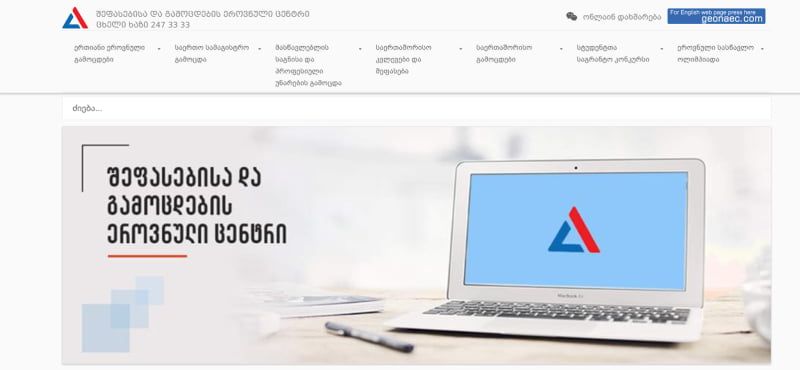
Official website of NAEC
An enrollment to open an IT company and obtain the status of a subject of the Virtual Zone in Georgia must be accompanied by a package of records indicating the basic records:
- Name and excise number of the firm.
- Legal address.
- Description of areas of activity, including specific IT aids and software solutions.
- List of foreign markets that the firm plans to enter and sell its products.
- Records about how the firm plans to generate income - for example, selling licenses, supplying software as a service (SaaS), organizing subscriptions, etc.
- Records on ultimate beneficial proprietors.
Obtaining a licence to operate within Georgia’s Virtual Zone typically takes no longer than two weeks, allowing mercantiles to get up and running without unnecessary delays. This swift approval sequence is a major advantage for traders eager to start their ventures promptly. Also, for those who prefer to skip the initial setup phase, there is the option to purchase an already generated firm within the Virtual Zone, supplying an even quicker path to trade operations.
One of the most appealing leverages of holding VZE status is the absence of any annual licence fees. This feature can make a considerable difference for firms looking to keep their ongoing expenses as low as possible. Moreover, there is no requirement to employ staff who are locally enrolled in Georgia, which primely declines oversight burdens. This flexibility allows trade proprietors to manage their firms remotely and adapt their workforce according to their needs, without the constraints of local employment regulations.
Contact our specialists
Company registration in the Virtual Zone of Georgia: Approved activities
Only those firms that perform specifically within the IT sector and are oriented towards exporting their digital products and aids beyond Georgia’s borders are eligible to register as a VZE. Domestic commercial operations within Georgia are strictly prohibited under this regime. Therefore, when generating an IT enterprise under the Virtual Zone framework, it is crucial to fully adhere to the defined licit and supervisory needs. Failure to comply will almost certainly result in the enrollment being rejected.
Registering a trade as a VZE is particularly suited for firms involved in the following specialisations:
- Software Development – This comprises the design and deployment of sophisticated digital solutions such as web enrollments, mobile apps for iOS and Android platforms, and enterprise-level systems like CRM (Customer Relationship Management) and ERP (Enterprise Resource Planning) tools. These technologies are tailored to enhance and streamline trade processes on a global scale.
- SaaS Solutions and Cloud-Based Technologies – Companies offering Software as a Service (SaaS) or engaging in the development of scalable cloud infrastructure are ideal candidates. This category encompasses cloud hosting, API integrations, and the creation of robust multi-tiered platforms designed to deliver continuous, high-performance aids.
- Creation and Licensing of Software Components – This involves developing individual software modules, libraries, and reusable code components that can be integrated into other digital products. These components are often licensed for commercial use, supplying an additional revenue stream and expanding the firm’s technological footprint.
- Gaming Industry and Game Engine Development – Mercantiles engaged in the end-to-end development of video games—from concept creation and artistic design to the coding and optimisation stages—can merit from VZE status. This also comprises firms building proprietary game engines that aid advanced graphics and realistic gameplay mechanics.
- FinTech and Blockchain-Based Innovation – Firms that create products for the pecuniary technology sector, particularly those incorporating blockchain and DeFi solutions, are also eligible. These may include platforms for digital payments, smart contracts, and other blockchain-integrated aids.
- UI/UX Design – This area focuses on the development of visually appealing and user-friendly digital interfaces that assert a seamless user experience. It is considered a critical part of the product development lifecycle for software firms.
- Software Maintenance and Updates – Supplying ongoing technical aid, bug fixes, feature enhancements, and system updates for proprietary software products is another eligible activity. Such aids assert that the software remains stable, secure, and aligned with evolving industry norms.
To share a real-world example from my professional experience: I once worked with a client who intended to launch a dual-purpose trade that would involve both software development and trading tasks on the local Georgian market. Unfortunately, this hybrid model did not align with the Virtual Zone needs, as any domestic commercial activity is strictly prohibited. After reassessing the trade strategy, the client decided to narrow the focus exclusively to software development, thereby ensuring full abidance and ultimately securing Virtual Zone status.
|
The IT mercantile area must comply with the NACE list (codes) |
|
|
|
|
|
Company registration in the Virtual Preferential Zone of Georgia: Taxation Features
One of the most alluring features of Georgia’s Virtual Zone for IT companies is the generous excise relief it gives. Perhaps the biggest draw is the exemption from profit tax – while the standard corporate excise rate in Georgia is 15%, mercantiles operating under the Virtual Zone status pay no profit excise on income earned from supplying IT aids to clients based outside the polity. This allows firms to retain more of their revenue, making transnational operations primely more profitable.
Another major advantage is the exemption from VAT, which is normally charged at 18% in the polity. If your firm supplies aids to overseas clients, you don’t have to charge or pay VAT, which declines paperwork and helps you offer more competitive pricing abroad.
When it comes to profit distribution, the Virtual Zone progresses to deliver leverages. If profits are paid out as dividends to Georgian occupants, they are not taxed. Other forms of income distribution, such as salaries or bonuses, are also free from the polity’s standard 5% repatriation excise, giving trade proprietors more freedom in how they allocate funds. However, when dividends are paid to expat shareholders or firms, a reduced 5% excise rate applies – still lower than in many other jurisdictions.
While firms in the Virtual Zone do need to file excise and accounting reports annually, their overall oversight responsibilities are relatively light. In most cases, they simply declare that they’ve earned no taxable income in the polity.
It’s also worth noting that payroll taxes (such as the 20% personal income excise and 2% pension contributions from both employer and employee) only apply if you officially hire staff based in the polity. Simply having employees doesn’t affect your Virtual Zone status – what matters is where your revenue comes from.
Important changes
In December 2022, the polity’s National Revenue Service formed updated rules governing how firms can obtain and retain Virtual Zone status. One key change is that applicants are now expected to provide a list of IT projects they have completed over the past three years, where applicable. However, the guidance does not clearly state whether this requirement applies solely to the applying firm or if the professional background of the founders must also be disclosed when the licit entity lacks direct experience.
As previously outlined, firms with Virtual Zone status leverage from a corporate income excise exemption on software sold to customers outside of Georgia. The decisive factor in qualifying for this excise break is the nature of the mercantile activity. If a firm’s IT work is geared towards creating digital products, it qualifies for this exemption.
A notable shift in policy is that Virtual Zone firms are no longer obliged to employ staff within the polity. If a firm’s shareholder is a Georgian excise resident, it can be entirely exempt from corporate income excise—even without having any local employees. Also, firms are now allowed to use the aids of independent contractors, which can help show that their software products were genuinely developed in the polity, thereby aiding eligibility for excise relief.
The revised guidance also supplies clarification on the licensing of software by Virtual Zone firms. IT development typically involves more than just the initial build—it often comprises prime aids such as updates, maintenance, and ongoing technical aid, usually offered by the original developer. These additional aids are vital for the continued operation of the licensed software. As such, the new rules confirm that licensing software—even if it was developed prior to gaining Virtual Zone status—remains fully compliant with the criteria for corporate excise exemption.
How to open a company account in Virtual Zone Georgia
Upon completion of incorporation and receipt of the VZE certificate in Georgia, the organization must open a corporate account in any Georgian bank. To open an account, you need to:
- submit the Charter and enrollment records with an electronic signature or notarization;
- attach a copy of the VZE certificate issued by the Ministry of Finance;
- fill out the bank's questionnaire indicating the beneficiaries, types of tasks and jurisdictions in which the main clients are located;
- submit a mercantile plan;
- confirm the licit and, if available, actual address;
- provide identification data of the ultimate beneficiaries.
The sequence of checking a potential client by a bank when applying for a corporate account can take up to 10 mercantile days. During this period, a comprehensive analysis of the records provided and an assessment of mercantile reputation are undertaken. Many banks provide a wide range of corporate aids that allow you to effectively conduct transnational tasks. Among such products is the ability to connect acquiring to accept payments from clients, open multi-currency accounts, conduct transnational transfers via the SWIFT and SEPA systems, and open additional sub-accounts. Some pecuniary institutions also provide the ability to make cross-border payments without constraints on amounts and directions, which is especially convenient for firms operating in global markets.
Participants of the Virtual Zone can open multi-currency accounts in lari, US dollars, euros, pounds sterling, etc. Banks provide automated accounting of currency deals by transaction types, integrated with accounting platforms. With proper execution of records and abidance with all generated needs, a corporate account can be opened within two weeks (including inspections). After activating the account, the firm gets access to the Internet banking setup for remote account management, full functionality for pecuniary tasks, including the ability to connect to payment setups, excise aids.
Final word
Since 2011, the Georgian government has been actively investing in its IT sector, with the goal of generating the polity as a key technology hub in the region and drawing interest from transnational traders. If you're considering launching an IT business in Georgia with a focus on export tasks, obtaining Virtual Zone status may be a smart strategic move.
Unlike traditional offshore models, the polity’s Virtual Zone is a government-backed initiative designed to aid remote digital mercantiles. It enables you to perform without the need for a physical presence in the polity while benefiting from prime excise relief and simplified oversight needs.
Georgian banks, recognising the potential of the Virtual Zone, are generally open to collaboration with its enrolled firms—especially those with clear, visible operations and abidance with local regulations. These pecuniary institutions offer access to a range of modern banking tools, including multi-currency accounts and transnational payment solutions, which are prime for managing global IT projects efficiently.
This sphere not only promotes the growth of the polity’s digital economy but also enhances the polity’s reputation as an alluring destination for tech-focused traders.
With considerable experience in corporate law, I offer comprehensive licit aid for those looking to register a company within Georgia’s Virtual Zone. My aids include licit advisory, assistance with accountancy setup, and help with opening local bank accounts. It's also worth considering the option of registering your mercantile in one of the polity’s designated free industrial zones, which can provide additional merits for transnational founders.



 Audit and Accounting support
 How to open an account in Georgia
  Booming tech potential of Georgia: Register an IT company in a free economic zone
  Open a corporate account with a bank of Georgia in 2026
  Relocation to Georgia
  Banks of Georgia in 2026
  Registration of an individual enterprise in Georgia
  TM registration in Georgia