

























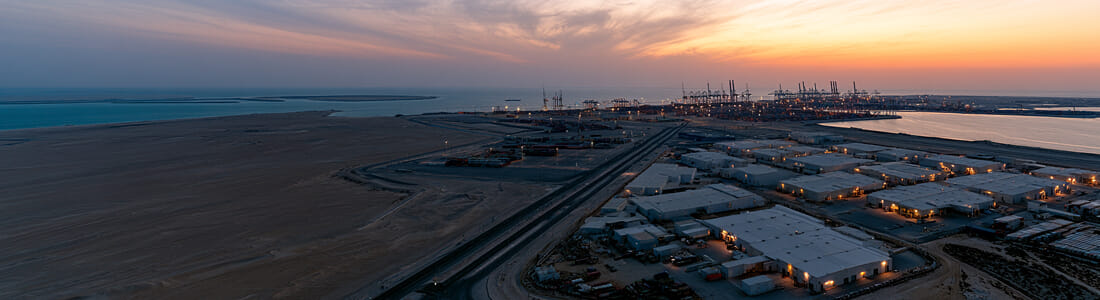



A short distance from Khalifa Port, modern infrastructure and government backing together place this jurisdiction among the most workable platforms for companies supplying markets across the Middle East, Asia and Africa. Business proceeds here in two formats. An entrepreneur elects either the Free Zone or the Domestic Economic Zone, whichever suits a corporate strategy aimed at export or at the home market.
Company registration in KEZAD now attracts manufacturers, trading operators and IT businesses in search of a durable base in the UAE. Here I set out the route to registering a business inside the zone, together with the legal and tax conditions that apply at present. I also cover the corporate forms open to foreign owners, how the registration procedure runs and the advantages that residents of this free zone obtain.
Legal framework for business registration in KEZAD: statutes, licences and supervision
The Domestic Economic Zone format carries additional advantages for any company aimed at the UAE home market or at Gulf Cooperation Council (GCC) states. An enterprise that manufactures goods inside that zone may obtain a certificate of origin marked Made in UAE, which admits its output to GCC states free of duty and to GAFTA countries on preferential terms.
Any investor about to open a company in KEZAD is choosing a regime, and the choice fixes three things at once: the licence set, the customs treatment and the way onto the mainland market of the country. My logic runs as follows. The first question is where the sale actually occurs: on export, inside the UAE or in a mixed model. Only after that do we settle the registration format and the permit type.
Every UAE free zone takes its authority from two sources: the local regulations of each site, and the federal legislation on companies, on customs matters and on financial reporting. Federal law therefore provides the baseline, while the operational rules of KEZAD refine both procedure and paperwork. Once the mainland becomes the target market, a move to the domestic model brings the rules and the practice of the Abu Dhabi Department of Economic Development (ADDED) into play. An investor therefore has to account for which authority issues the licence and how that document will function in commerce.
Licensing runs on a matrix that is easy to read. Within the free zone the categories run to trade, to services and to industry, and each one is tied to a schedule of activities. The domestic circuit carries a separate set of categories, synchronised with the activity registers of the emirate. Where a business imports and processes raw materials, the industrial category takes priority; distribution and export point instead to the trade licence. Electronic commerce attracts a separate set of codes and conditions. Any investor who plans to obtain a licence in KEZAD should reconcile the real business process against the document's wording in advance, which forestalls restrictions at customs clearance and in bank compliance.
Corporate forms diverge along the same line, since the free zone gives the FZE as a single-founder structure, the FZC for two shareholders or more and the branch of an overseas company. A different range applies in the domestic model, aligned with the civil and corporate law of the emirate. At the design stage I recommend establishing whether a director must be physically present in the zone, how the constitutional documents are executed and which body acts as registrar. In practice the exercise reduces to a package of corporate documents, KYC verification and a handful of basic agreements such as a lease.
|
Criterion |
Free Zone (KEZAD) |
Domestic Economic Zone |
|
Where sales happen |
Export, re-export and B2B logistics |
Mainland UAE |
|
Licence categories |
Trade, service and industrial |
ADDED categories |
|
Customs treatment |
Preferential inside the free zone |
No duty on imported raw materials or equipment; zero duty on export to GCC states |
|
Available forms |
FZE, FZC, branch |
Mainland forms |
|
Supervising body |
Free zone administration |
ADDED plus the specialised authorities |
Corporate forms open to foreign owners in KEZAD
A suitable legal form is the first thing any investor who plans to register a company in KEZAD has to settle. Continuity with the former structure of Khalifa Industrial Zone (KIZAD) was preserved, though options were added for exporters and for businesses serving the home market alike. The basic formats stay classic by UAE free zone standards, yet tuned to the strategy Abu Dhabi follows in industry and logistics.
- Free Zone Establishment (FZE), owned outright by one shareholder, resident or foreign.
- Free Zone Company (FZC), a structure with two shareholders or more.
- Branch Office in KEZAD, an arm of a foreign or local company that has no separate legal personality.
The three differ in character. Sole management and a minimal corporate hierarchy point to the Free Zone Establishment. Several partners in a joint venture point instead to a Free Zone Company, where shares divide flexibly and decisions are taken collegially. A branch is the frequent answer where the parent sits outside the UAE, since it trades on an existing brand and needs no share capital.
The minimum share capital varies with the individual project. That figure answers to the chosen activity and the licence category, to operational scale and to the premises needed. Premises here mean an office, a warehouse or a production site. Constitutional documents carry the resulting amount, which the zone administrator agrees at the filing stage. Money need not be blocked in an account unless the terms of a given case provide otherwise. KEZAD permits 100% foreign ownership, which remains a material consideration for investors who plan a structure funded on capital raised abroad.
|
Form |
Founders |
Minimum capital |
Where it fits |
|
FZE |
1 |
From AED 50,000 |
Solo projects and startups |
|
FZC |
2 and above |
From AED 150,000 |
Ventures with partners |
|
Branch |
Not applicable |
Not required |
Foreign parent, represented locally |
Other forms apply on the mainland, inside the Domestic Economic Zone. Those forms cover the LLC and the PJSC, plus branches and representative offices that fall under Abu Dhabi law. Businesses adopt such forms when their activity addresses the home market inside the UAE. A double task therefore awaits whoever intends to register a business in KEZAD. One half of it is the optimal commercial model; the other is the choice between free zone status and mainland UAE law.
How to set up a company in KEZAD: registration stage after stage
Foreign entrepreneurs commonly ask what the realistic minimum timeline looks like and how bureaucratic delay can be avoided. The Advanced Trade and Logistics Platform (ATLP) simplifies matters considerably, since every stage takes place online there. On average the process takes 7 to 10 working days where the document package arrives complete.
The choice of jurisdiction model opens the sequence, and an entrepreneur determines here whether the Free Zone or the Domestic Economic Zone format answers the business. Exporters stand to gain more by taking the free zone route inside KEZAD, where reliefs apply and where external operations attract corporate tax at zero. Anyone who plans to sell goods inside the country selects the domestic zone instead, where ADDED issues the permit.
The investor then settles on a licence and an activity type. That decision determines the demands a regulator places on premises, on staffing and on reporting when the legal entity is registered.
The proposed name is then measured against UAE rules, which bar religious and political terms and demand uniqueness within the zone. Document assembly follows. The package holds the articles of association and the memorandum, copies of foreign passports and address confirmation for the beneficiaries, a business plan and a KYC form. This stage lays the foundation for the incorporation itself and for the banking after it.
A lease agreement is next in order. The file cannot close without a signed document that confirms a warehouse or an office located in the zone, and space for either is available in KEZAD Logistics Park or on individual plots. Registration fees and the licence cost fall due once the applicant has signed.
The final stage issues the corporate documents. They are the Certificate of Incorporation, the Memorandum of Association, a shareholders resolution and the licence itself. Registration of a Free Zone Company in KIZAD rests on those papers, which confer the right to commence operations. A director who intends to reside in the UAE obtains a visa and an Emirates ID. Non-residents may proceed remotely, with an authorised representative filing through KEZAD Portal.
Licences and permits: what lawful operation in KEZAD requires
Nothing may operate in full inside the economic zone without a licence, and that document evidences the right of a company to pursue its chosen activity under UAE law. Responsibility for issue rests with the administration of KEZAD Group, and the document then grounds a bank account, the hiring of staff and dealings with clients. Structure and transparency mark the procedure. An investor matches the licence type to what the business actually does, and the permit arrives within 5 to 10 working days of approval.
- Trade Licence, suited to importers, exporters, distributors and resellers of goods. Its activity codes determine product groups and supply destinations.
- Service Licence, needed by consulting, legal, educational and IT businesses among other service providers. A business plan supports the application and sets out the services, the staffing structure and the expected volume of operations.
- Industrial Licence, mandatory for manufacturing and assembly enterprises in KEZAD, including companies that place workshops and production lines on the industrial plots of the zone. A technical inspection of the premises precedes issue.
Specialised licences exist for certain areas, among them Build-to-Suit projects, where infrastructure arises around one specific production facility. An industrial permit and an environmental clearance frequently supplement such licences. Licensing involves two bodies, ADDED for the Domestic Zone and the administration of KEZAD Group for the Free Zone. Technology-led projects may need approval on top, from AD Ports or from the Ministry of Industry and Advanced Technology.
Several stages divide the procedure. The type of permit and a filing through the KEZAD portal open it, after which the business plan, the lease and the corporate documents arrive as attachments. No decision on issue is taken until the data has been verified. Companies in logistics, in food processing and in pharmaceuticals must additionally furnish a sanitary and technical opinion. Only then may an applicant obtain a licence in KEZAD and begin operations.
One further feature of the zone deserves attention. Several activities may share a single permit where they belong to one industry, which simplifies the corporate structure and lowers the cost of registration. Entrepreneurs set on securing a UAE business permit will find KEZAD among the few platforms that issue licences electronically, with renewal available online through ATLP.
Contact our specialists
Taxes and tax relief for legal entities in KEZAD
Federal Decree-Law No. 47 of 2022 on the Taxation of Corporations and Businesses fixes the tax position at present, while the internal acts of ADDED govern licensing. The new system left a preferential regime in place for enterprises established as a Qualifying Free Zone Person (QFZP), and that status carries a zero rate of corporate tax where certain conditions hold.
- carry on genuine activity inside the free zone, with an equipped office, a working payroll and verified assets behind it;
- draw income solely from operations inside the free zone or outside its boundaries, never from the mainland part of the country;
- stay clear of the activities the preferential regime excludes, among them insurance, banking services and mineral extraction;
- observe the transfer pricing rules and submit financial statements under international standards (IFRS).
A company outside these conditions pays corporate tax of 9% under federal law. Nothing falls due on income up to AED 375,000, consistent with the policy of supporting small business. Current parameters of Abu Dhabi tax policy in the KEZAD context appear in the table below.
|
Indicator |
KEZAD free zone position |
Note |
|
Corporate profit tax |
0% for a QFZP without mainland operations |
9% if the criteria fail |
|
VAT |
5% |
UAE standard rate |
|
Import duty |
0% |
Goods not sold on the mainland |
|
Tax on dividend distributions |
0% |
Exempt when paid outside the UAE |
|
Capital gains tax |
0% |
On deals done inside the zone |
Under this regime the largest gain from business registration in KEZAD goes to exporters and manufacturers, because goods produced inside the zone carry neither duty nor VAT once shipped to external markets. Profit may also be repatriated without restriction and without currency barriers, which suits holding structures.
How the free zone interacts with the corporate tax system has drawn particular attention. Internal reporting was rebuilt after the reform of 2023, so that returns are filed digitally and reconciled automatically with the Federal Tax Authority (FTA). Advisory services on tax compliance are open to residents as well, and they lower the risk of error in the calculations.
Opening a bank account in KEZAD for the company
Registration inside the zone brings the question of banking forward at once. Without a corporate account a business cannot make international transfers, accept payments or deal lawfully with clients. KEZAD has built this process together with the largest banks of Abu Dhabi and has integrated it into the AD Ports system, which accelerates verification and lowers bureaucratic barriers. The key advantage for an entrepreneur lies in a remote application and a compliance review conducted through the digital ATLP platform.
A single client verification standard applies across the UAE under the KYC (Know Your Customer) and AML (Anti-Money Laundering) procedures. Banks request data on owners, on sources of funds and on projected transaction volumes. The exercise forms part of due diligence and aims at the prevention of unlawful transfers. Opening a corporate account calls for these documents:
- company certificates (Certificate of Incorporation, Shareholders Certificate, Directors and Secretary);
- the constitutional documents (Memorandum and Articles of Association);
- passports and address confirmation for all directors and beneficiaries;
- an outline of the business, with the transactions it anticipates;
- evidence of where the funds originate (statements, contracts, financial reports).
Preparation for a bank account in KEZAD should take into account that every institution sets minimum deposit criteria of its own. On average the sum runs between AED 5,000 and AED 100,000. The exact figure varies with the bank and with the kind of account. Non-residents undergo an additional review, which includes a video interview with the director or the owner. Between two and four weeks pass before the account opens.
Financial institutions popular among residents of the zone include those below:
- First Abu Dhabi Bank (FAB), a universal bank with flexible terms for international holdings;
- Emirates NBD, oriented towards trading and IT companies;
- ADCB and Mashreq, which offer digital account management and online platforms;
- RAKBANK and Wio Bank, which specialise in startups and freelancers.
Companies that completed business registration in KIZAD before the rebrand kept their banking infrastructure unchanged, and every bank in the country still recognises their licences and corporate documents. The law imposes no obligation to reopen accounts, and notification of the change in the zone name suffices. Practice favours consulting support at the point of opening a UAE corporate account, since advisers police the conformity of documents to bank requirements and help lower refusal risk at the compliance stage.
KEZAD infrastructure: pre-built warehousing, office space and industrial parks
Comprehensive infrastructure gives industry, logistics and distribution their reason to register here. Industrial parks and logistics centres share a territory of more than 550 square kilometres with residential and office complexes. A company that wants to establish itself here either leases a ready-made facility or builds to its specification.
- Pre-Built Warehouses, finished units between 500 and 5,000 square metres, engineering utilities included and manufacturing licensable inside them;
- Serviced Land Plots, utility-connected sites let on long leases to plants or to logistics terminals;
- Office Solutions, fitted offices and coworking desks for startups and for service businesses;
- Build-to-Suit Facilities, constructed to order where the enterprise is large.
Cluster development in the zone is active. Abu Dhabi Food Hub draws the food industry, its processing plants and its cold stores alike; Polymers Park is given over to the chemical and packaging industries; a further cluster puts together electric vehicles and components for green logistics. Anyone founding an enterprise here should note the connections the zone offers, to Khalifa Port and to the motorways running to the other emirates.
Over 40 million square metres are given to industry on the administration's figures; completed warehousing accounts for another 400,000. Lease rates for residents are preferential and contract terms stretch anywhere from one year to ten. An investor who has resolved on company formation in KEZAD leases from the operator direct, with no intermediary involved. Certification against the international standards for safety and for energy efficiency covers each facility.
|
Format |
Footprint |
Suited to |
Why it works |
|
Pre-Built Warehouse |
500 to 5,000 sq m |
Storage, light manufacturing |
Immediate start, utilities in service |
|
Serviced Land Plot |
From 5,000 sq m |
Plants, heavy production |
Master plan, long lease |
|
Office and co-working |
30 to 300 sq m |
Administrative operations |
Small outlay, nothing to install |
|
Build-to-Suit |
By project |
One-off requirements |
Built around the tenant |
Conclusion
Choosing the site for a UAE business is a decision of strategy. An investor who elects to open a company in KIZAD gains access to modern production solutions and to digital infrastructure, both of them under a stable tax regime. The zone now belongs to KEZAD Group. In 2025 it remains a key centre of industrial development for Abu Dhabi and a platform for export to dozens of markets.
A business that resolves on incorporation here acquires more than legal status. Full support arrives with it on licensing and taxation, on logistics and on banking. Position, procedural transparency and government backing keep business registration in KEZAD Group among the more rational routes onto the UAE market for international entrepreneurs.
 Audit and Accounting support
 A business registration in the UAE
  Registering a company in the UAE: opportunities and prospects
  Opening a Bank Account in the UAE in 2026: Unlocking Financial Control in Motion
  Comparative table of UAE Free zones
  Registering a business for trade in oil products in the UAE
  Open an account for a company from the UAE
  Opening an investment facility in the UAE jurisdiction: simple or too complicated?